
HEALTH JOURNAL
Acupuncture for PCOS
Ben Wong · · Updated
Acupuncture helps improve infrequent periods and long menstrual cycles in women with polycystic ovary syndrome, or PCOS, during treatment. The appointment focuses on your menstrual pattern alongside your existing PCOS care.
PCOS is a syndrome assessed from the overall reproductive and hormonal picture. This article addresses menstrual timing in people with an established diagnosis.
PCOS was renamed polyendocrine metabolic ovarian syndrome, or PMOS, on May 12, 2026. The new name emphasizes the condition’s endocrine and metabolic features. Existing records and searches still commonly use PCOS. This article uses that familiar name while focusing on menstrual frequency and cycle length during treatment. Monash records the name change.
On this page
- Does Acupuncture Help with PCOS?
- How Effective Is Acupuncture for PCOS?
- Is Acupuncture Backed by Science?
- What You Should Know Before Booking an Acupuncture Treatment
- How Do You Know If Acupuncture Is Working?
- How to Get Acupuncture for PCOS at Wongs Acupuncture
- Final Thoughts About Acupuncture & PCOS
- Sources
Does Acupuncture Help with PCOS?
Yes. Acupuncture helps improve menstrual frequency and shorten long cycles in women with PCOS during a course of treatment. It is a practical option when the main concern is infrequent periods or an unpredictable cycle, alongside the broader PCOS care plan.
PCOS affects reproductive and metabolic health. The NIH’s NICHD symptom guide identifies irregular or absent periods among its common features. Bring the dates of recent periods and describe how long the gaps have been. The cycle question is the focus of this article; your reproductive and metabolic goals should also be recorded at the consultation.
What does Chinese medicine look at beyond the calendar?
Chinese medicine considers the menstrual pattern together with energy, sleep, digestion, cold or heat sensations and the practitioner’s examination. Its Kidney, Liver and Spleen concepts describe traditional functional systems. The discussion of Kidney support concerns the traditional regulation of reproductive rhythms, while Liver regulation concerns smooth functional activity and Spleen support concerns nourishment and fluid transformation.
Beijing Obstetrics and Gynecology Hospital’s PCOS teaching connects reduced Kidney support, Phlegm-Dampness, constrained qi and impaired blood movement. These describe different, sometimes overlapping treatment considerations. A tendency to feel cold and depleted points toward a different emphasis from heaviness with digestive sluggishness, or tension with a sense of fullness around the cycle.
“Phlegm-Dampness” is a traditional description of impaired fluid transformation and heaviness, rather than just mucus from a cough. The hospital’s separate explanation discusses the combination of delayed periods, heaviness, fatigue and digestive symptoms. A practitioner considers the combination, rather than assigning a pattern from weight or one symptom alone.
Why are abdominal and leg points considered together?
Traditional menstrual treatment connects lower-abdominal points with the reproductive region and leg points with the functional systems involved in regulating the cycle. Guanyuan and Sanyinjiao are examples discussed in the textbook chapter on menstrual irregularity.
Local, distant or combined choices are tailored to the history, pattern, comfort and response. The acupuncturist’s experience and preferences also guide the selection. Point names explain the treatment reasoning; the visit establishes the plan appropriate for you.
How Effective Is Acupuncture for PCOS?
The cycle benefit is more frequent menstrual periods and shorter overly long cycles during treatment. A recent randomized trial found both changes when acupuncture was added to usual lifestyle care.
For someone whose periods are widely spaced, the practical aim is a clearer, more regular menstrual pattern that can be followed over successive cycles. Keep the prescribed gynecology plan and any advice about prolonged gaps between periods in place while acupuncture is arranged.
Our PCOS overview explains how cycle care, metabolic follow-up and fertility planning fit together. If the main difficulty is discomfort or mood changes before a period, the PMS acupuncture guide covers that distinct symptom pattern.
Is Acupuncture Backed by Science?
A 2026 randomized trial found that adding acupuncture to usual care improved menstrual frequency and cycle length over 16 weeks in women with PCOS and infrequent periods.
The multicenter pilot trial enrolled 60 women aged 20–40 in China and South Korea. The intervention used manual acupuncture with lifestyle guidance, while the comparison group received lifestyle guidance alone. The cycle outcomes favored the acupuncture group during the treatment period.
This gives the article a specific, measurable focus: menstrual timing during active care. At later visits, the continuing cycle record helps the practitioner and your gynecology clinician review what the ongoing plan should address.
What You Should Know Before Booking an Acupuncture Treatment
Bring recent period dates, the longest gaps, any pregnancy possibility, relevant test results and your medicine or supplement list. Include your gynecologist’s instructions about bleeding, cycle medication, protection of the uterine lining during prolonged gaps, and follow-up.
The first acupuncture appointment is about 75–90 minutes, covering history, assessment and treatment. Clothing that allows comfortable access to the areas discussed is helpful. The practitioner explains the planned areas, arranges privacy and positioning, and uses sterile, single-use needles. Mild heaviness, pressure or aching can be part of the experience; report sharp discomfort promptly so it can be adjusted.
Tell the clinic before treatment about a possible or confirmed pregnancy and any new heavy bleeding or significant pelvic pain. Continue prescribed PCOS treatment and scheduled medical monitoring. The appointment plan is tailored to the cycle history, current health and your comfort.
How Do You Know If Acupuncture Is Working?
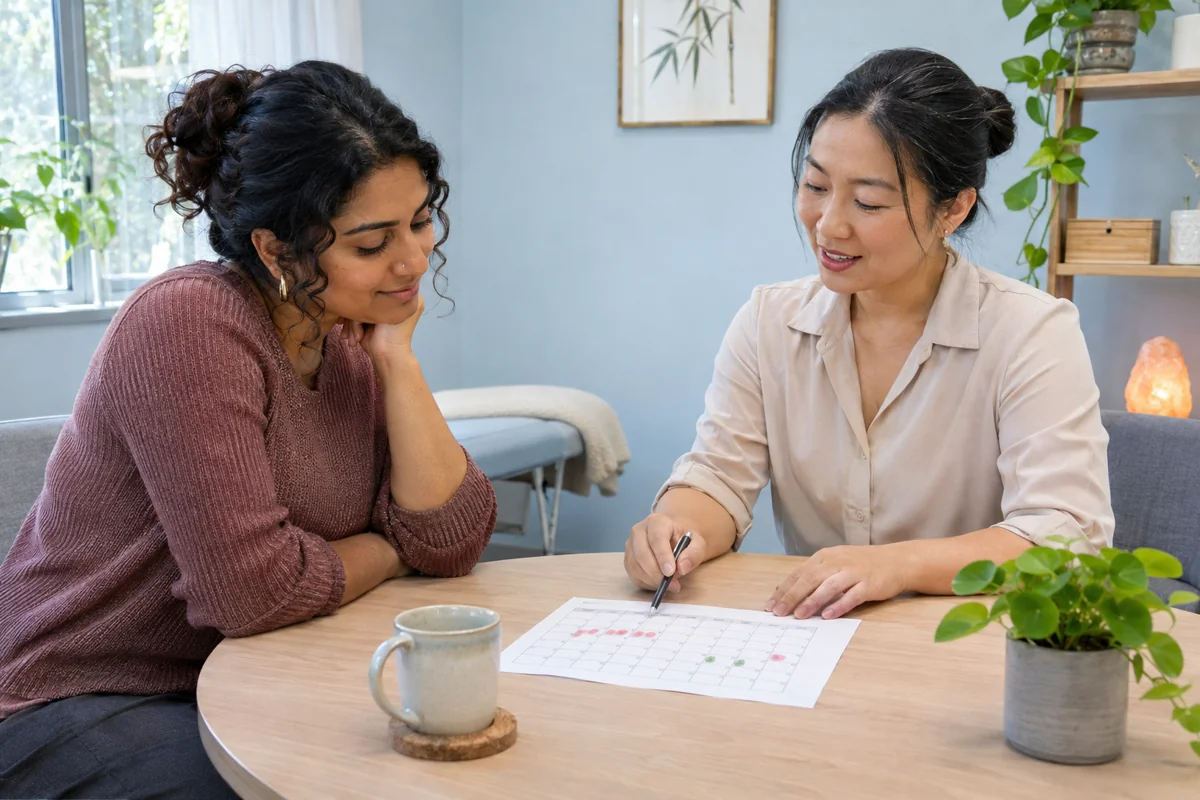
More frequent periods and shorter long gaps are the main signs of improvement for this treatment goal. A simple calendar makes those changes visible.
- Record the first day of each period and the interval to the next.
- Note bleeding duration and whether it was a spontaneous period or followed prescribed cycle medication.
- Add changes in discomfort, sleep or energy that you want discussed, while keeping menstrual timing as the main goal. Record any clinician-assessed ovulation results separately from bleeding dates, following the gynecology plan.
Review the pattern across successive cycles with the practitioner. The dates, accompanying symptoms and any medicine changes help tailor the next stage of treatment and keep your gynecology follow-up coordinated.
How to Get Acupuncture for PCOS at Wongs Acupuncture
Book an acupuncture appointment at our Manhattan, Forest Hills or Great Neck office and tell us that you are seeking care for PCOS. Our acupuncture service page connects you with the three offices and appointment options.
Bring the relevant records and your current treatment plan. For coverage questions, review the insurance and appointment information and share your plan details when arranging the visit.
Final Thoughts About Acupuncture & PCOS
Acupuncture gives PCOS cycle care a clear focus: improving infrequent periods and long menstrual intervals during treatment. Bring your calendar and current care plan so the appointment can address your cycle and the way it affects daily life.
Sources
OUR LOCATIONS
Choose a clinic.
Choose a convenient location to discuss your needs or arrange a visit.