
HEALTH JOURNAL
Acupuncture for Traumatic Peripheral Nerve Injury
Ben Wong ·
Clinical comparisons in peripheral nerve injury have recorded improvements in sensory, motor or nerve-conduction measures during acupuncture care. The consultation connects those rehabilitation aims with the nerve and function affected in your case.
Traumatic peripheral nerve injury can involve nerves such as the radial, ulnar or peroneal nerve. Weakness or palsy, numbness and pain depend on the site and extent of injury; examination and relevant testing establish the diagnosis.
On this page
- Does Acupuncture Help with Traumatic Peripheral Nerve Injury?
- How Effective Is Acupuncture for Traumatic Peripheral Nerve Injury?
- Is Acupuncture Backed by Science?
- What You Should Know Before Booking an Acupuncture Treatment
- How Do You Know If Acupuncture Is Working?
- How to Get Acupuncture for Traumatic Peripheral Nerve Injury at Wongs Acupuncture
- Final Thoughts About Acupuncture & Traumatic Peripheral Nerve Injury
- Sources
Does Acupuncture Help with Traumatic Peripheral Nerve Injury?
Acupuncture studies have recorded functional improvement in people with assessed peripheral nerve injuries, including sensory and motor outcomes.
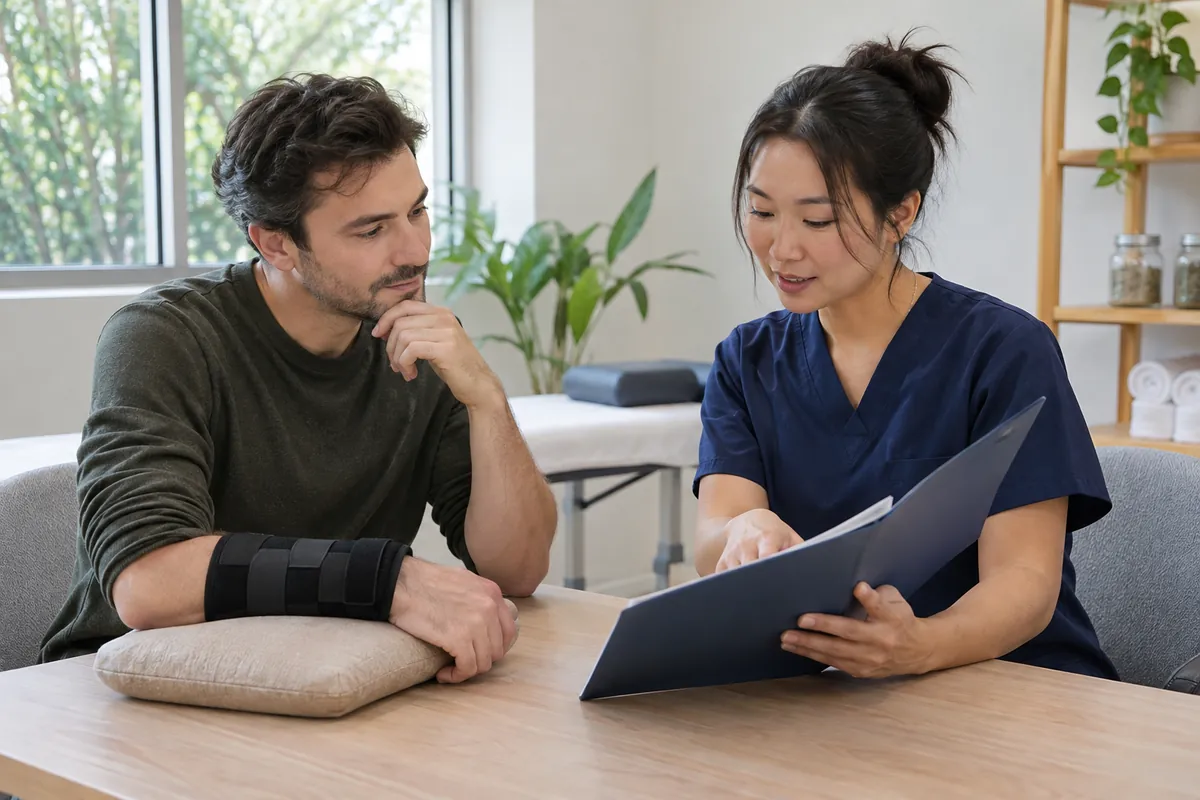
Bring the injury diagnosis, the nerve involved and any electrodiagnostic results. Describe a useful movement or sensation you want to improve, such as wrist control or feeling during a permitted hand task. Rehabilitation and any surgical instructions guide the activity plan.
Traditional reasoning considers weakness and nourishment together
Traditional limb-weakness teaching considers the relationship between channel function, the sinews and the support provided by Qi and Blood. Sensory change, local injury and general fatigue add information to that assessment. The traditional description accompanies the anatomical nerve diagnosis. Acupuncture textbook: limb weakness (traditional theory).
Point selection relates to the affected limb and the wider pattern
A local choice addresses the region of impaired function; distant or other body points provide complementary traditional roles. The published study compared local treatment with a combination that added governing-vessel points, such as Baihui for upper-limb injury. Both groups received electroacupuncture. The practitioner makes an individual choice using examination, experience, preferences and response.
How Effective Is Acupuncture for Traumatic Peripheral Nerve Injury?
Published clinical comparisons recorded improvement in limb function and selected nerve-test measures during acupuncture treatment. These are rehabilitation outcomes related to the affected nerve.
The 2015 study compared two acupuncture approaches, both using local treatment, with one adding another point approach. An earlier clinical comparison also assessed sensory, motor and electrophysiological changes. The findings are described as results from those specific study programs.
Is Acupuncture Backed by Science?
Direct clinical publications include a small comparative study of traumatic peripheral nerve injury and an earlier clinical comparison reporting sensory, motor and nerve-test outcomes. Comparative acupuncture study for traumatic peripheral nerve injury (2015). Clinical comparison of acupuncture for peripheral nerve injury (1995).
The nerve involved, injury severity and stage of recovery determine which clinical measures are relevant. Bring your specialist’s report so acupuncture and rehabilitation goals use the same diagnosis and restrictions.
What You Should Know Before Booking an Acupuncture Treatment
Your first visit includes a review of your diagnosis, medicines and main goal, followed by an explanation of the treatment and comfortable positioning. Allow 75–90 minutes for the initial appointment; this is the whole visit.
Bring the specialist report, nerve-conduction or EMG results, relevant surgery dates and splint or loading instructions. Tell us about reduced sensation, skin changes and movements that are protected. The practitioner can arrange supported positioning around those needs.
We primarily use manual acupuncture and also offer electroacupuncture and auricular acupuncture. Auricular acupuncture uses needles; ear seeds provide needle-free pressure stimulation. The practitioner discusses the method, uses sterile single-use needles and checks your comfort. Share pregnancy, blood-thinning medicines, implanted electrical devices and relevant skin changes before treatment. UCLH: having acupuncture.
How Do You Know If Acupuncture Is Working?
Progress is improvement in the specific movement, sensation or symptom selected with the clinician.
Examples include more controlled permitted wrist movement or a change in the clinician’s sensory examination. Review strength, function and any scheduled nerve testing together with the rehabilitation team. Keep splints and movement restrictions aligned with the specialist plan.
How to Get Acupuncture for Traumatic Peripheral Nerve Injury at Wongs Acupuncture
Book an acupuncture consultation and tell the office the diagnosis and the symptom you want to address.
Our Manhattan, Forest Hills and Great Neck clinics all offer acupuncture. Choose an office through the acupuncture appointment guide and share relevant reports when arranging the visit. Wongs Acupuncture & Angel Alliance Physical Therapy coordinates the plan with your current care. If using insurance, ask the selected office to check the requested service and provider benefits.
Final Thoughts About Acupuncture & Traumatic Peripheral Nerve Injury
An acupuncture consultation connects symptom and function goals with diagnosis-specific peripheral nerve rehabilitation. A consultation starts with the injured nerve, its current function and the practical task that matters most to you.
Sources
The following clinical and professional sources support the points discussed above.
OUR LOCATIONS
Choose a clinic.
Choose a convenient location to discuss your needs or arrange a visit.