
HEALTH JOURNAL
Ankle Sprain Rehabilitation: Walking, Balance and Returning to Activity
Dr. Wei (Sean) Li · · Updated
Rehabilitation after an ankle sprain helps you regain walking, movement, strength and balance, then prepare for the demands of work or sport. The starting point depends on the injury. A mildly sore ankle and an ankle that cannot support your weight should not begin the same routine. Less pain is encouraging, but does not by itself show that the ankle is ready for sudden turns or uneven ground.
This guide concerns lateral ankle sprains: injuries to the ligaments on the outside of the ankle. A fracture, a high ankle sprain, an injured tendon or a recent operation can require different protection and progression.
On this page
Why should a “simple sprain” be assessed?
Ligaments connect bones and help support a joint. An ankle sprain stretches or tears these tissues, commonly when the foot rolls beyond its normal range. The AAOS ankle sprain guide explains that severe sprains and fractures can cause similar pain, bruising and swelling. Symptoms alone may not tell you which injury occurred.
An assessment considers how the injury happened, tenderness, swelling, movement and your ability to bear weight. Imaging may be used when the findings suggest a fracture or another injury. MRI is not required for every sprain. Describe any previous sprains, repeated giving-way and the activities you need to return to.
Get medical assessment if you have trouble putting weight on the ankle, or if pain and swelling persist despite initial care. A new major loss of function should not be tested by repeatedly hopping or walking through it. A confirmed diagnosis helps determine whether routine rehabilitation is appropriate.
How do protection and walking fit together?
Protection does not always mean keeping the ankle still for a long period. The 2021 lateral ankle sprain clinical guideline recommends external support, such as a brace or tape, and progressive weight bearing for an acute lateral sprain. The type of support and any walking aid depend on severity, healing stage, pain and the person’s needs. More severe injuries may need a short period of immobilization.
The current plan specifies permitted weight bearing, support or crutch use and the walking pattern to practice. Do not stop a prescribed boot or cast because an online program begins with standing exercises. Support does not replace rebuilding ankle movement and control.
For example, walking across your room and commuting over stairs are different demands. Describe the distance, surfaces and loads involved in your usual day so that the plan accounts for them.
What does a useful rehabilitation plan rebuild?
The guideline recommends structured therapeutic exercise in the clinic and at home, selected for the injury and examination. Relevant components can include protected movement, stretching, strength, coordination and balance. They are connected parts of recovery, rather than a checklist everyone must complete at the same speed.
| Priority | What it contributes | How the individual plan applies it |
|---|---|---|
| Movement | Regaining appropriate ankle motion within current protection requirements. | Select directions, a comfortable range and temporary limits within the protection plan. |
| Strength | Rebuilding the ability to control the foot and support a task. | Start with suitable resistance or assistance, then progress according to performance. |
| Balance and coordination | Controlling body position as the demands change. | Use stable support and an appropriate balance challenge to reduce the risk of falling. |
| Task practice | Preparing for stairs, uneven ground or sport-specific movements. | Build the necessary capacity before trying stairs, uneven ground or sport movements. |
The American Physical Therapy Association’s ankle sprain guide describes how these components fit together. Depending on your stage, a therapist might choose an ankle movement in sitting before progressing to a supported standing task. Those examples explain the sequence of decisions; they are not instructions to test your balance on an unassessed ankle.
What can selected ankle exercises look like?
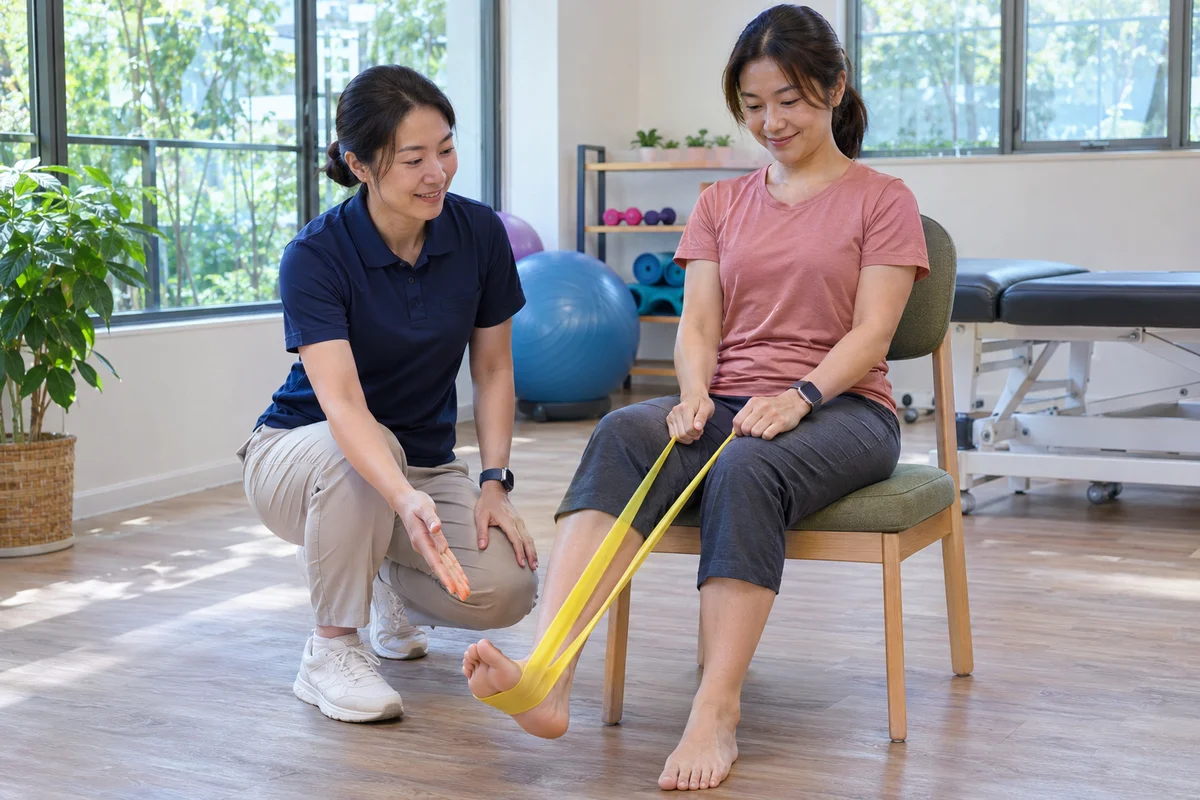
AAOS illustrates ankle movement and calf-raising exercises. These examples serve different purposes and begin only when the injury assessment and current protection plan permit them. The therapist demonstrates the selected version, observes you repeat it and sets its range, repetitions and frequency.
- For movement practice, sit securely with the foot clear of the floor. Lead with the big toe to trace small letters in the air, moving the foot and ankle rather than the whole leg. Use only directions and a comfortable range allowed in your plan.
- For calf strength, once standing load is permitted, stand with weight shared between both feet and hold a sturdy chair or wall. Slowly lift both heels, then lower with control. Single-leg raising adds load and comes later only when appropriate.
The first exercise practices available ankle movement; the second trains the calf’s ability to lift and lower the body during a step. Balance work adds a different demand: controlling body position over the supporting foot. More resistance, less hand support and more complex surfaces are separate progressions, chosen after reviewing control and the ankle’s later response.
What should the home program tell you?
Home instructions cover position, movement, support, amount and frequency. Technique is checked, with clear symptoms for pausing or changing the exercise. Difficulty safely using a support, getting to the floor or using equipment calls for an appropriate alternative.
Keep strengthening, balance practice and extra walking within the agreed plan. Increasing them all at once can make a flare harder to interpret. Our home exercise guide helps you organize instructions and feedback without turning a general exercise list into a personal prescription.
How do you know when to progress?
Compare the actual task, the amount you did and the ankle’s response afterward. A shorter, easier walk is different from the same distance with a heavy bag. Note swelling, pain, a limp, repeated giving-way and how the ankle feels later or the next day. Bring that information to the therapist so the next step follows your recovery rather than a preset week.
Ordinary walking does not establish readiness for cutting, jumping or a physically demanding shift. Movement, strength and balance demands are reviewed before increasing the challenge. Recovery depends on injury severity and activity demands; a published timeline is not clearance.
What if the ankle keeps giving way?
Repeated sprains or a persistent feeling of instability deserve review, even when resting pain is mild. Balance and coordination can remain important after the first painful period. The 2021 guideline recommends balance-focused exercise and appropriate bracing to reduce the risk of another sprain after a first-time lateral injury.
This is a reason to reassess what remains limited, not simply keep the same brace forever or repeat the first exercise routine. Persistent symptoms can also require consideration of another injury. Explain whether the ankle gives way during ordinary walking, uneven-ground activity or a sudden turn.
Preparing for a PT appointment
Explore physical therapy at Wongs Acupuncture & Angel Alliance Physical Therapy in Manhattan, Forest Hills and Great Neck. Bring any injury reports, current protection instructions and the brace or walking aid you use. Explain one everyday goal and any sport or work demand you hope to regain.
Allow approximately 75–90 minutes for an initial PT visit. Confirm referral, authorization and insurance requirements with the chosen office. If you wish to discuss another pain-care option, an acupuncture consultation can be considered separately after assessment; it does not replace injury protection or the movement plan.
OUR LOCATIONS
Choose a clinic.
Choose a convenient location to discuss your needs or arrange a visit.