
HEALTH JOURNAL
Can Cupping Make Everyday Movement Easier With Back Pain?
Ben Wong ·
Dry cupping creates suction through cups placed on the skin without intentionally piercing it. For assessed nonspecific low-back pain—pain not attributed to a particular identified cause—it can be discussed as a symptom-focused option within the care plan. A useful goal is more comfortable sitting or walking, followed by a review of whether the change is meaningful. Source
The decision depends on the back problem, the condition of the skin and what the rest of treatment is intended to do. A brief change in comfort, a skin mark and improved ability to manage a daily task are different observations. They should not be treated as one result.
On this page
- What suction does, and how that differs from a treatment claim
- The 2018 study compared cupping with medication on demand
- The 2025 study asked whether cupping added to rehabilitation
- Pressure, skin marks and comfort guide different decisions
- Review daily use and the rest of the back-pain plan
- Medical changes come before another cupping session
What suction does, and how that differs from a treatment claim
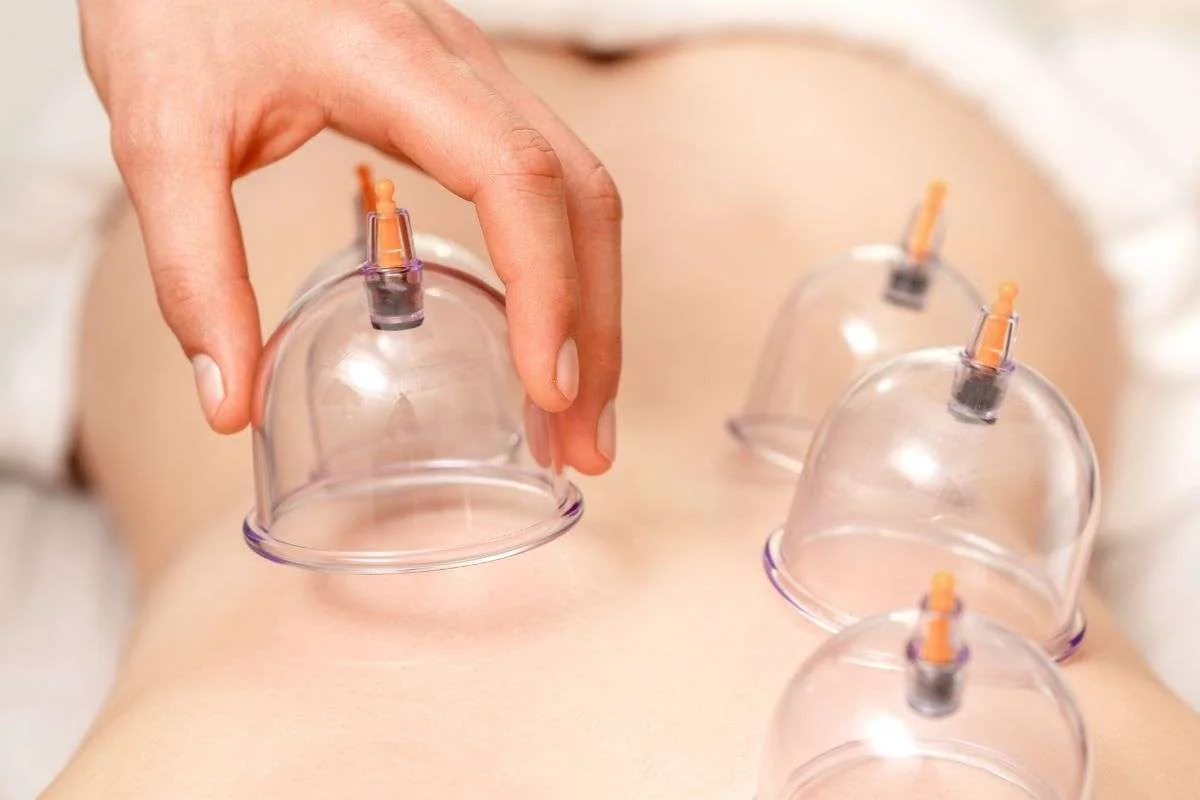
Negative pressure means that pressure inside the cup is lower than the surrounding air, creating a pulling contact with the skin. It can feel like traction or tightness. A pump or a method involving heated air can create that suction. Dry cupping keeps the skin unpierced; wet cupping intentionally breaks the skin and involves bleeding, so it is a different procedure. Source
The 2018 trial also describes pulsatile cupping, in which a device varies the suction rather than applying one steady level. Its discussion considers sensory stimulation, pain-processing effects and relaxation in the treatment setting as possible explanations for changes in how pain feels. Those are explanatory hypotheses, distinct from the trial’s measured pain scores. Primary study
A pulling sensation does not show that a disk has been returned to place or a compressed nerve released. The treatment goal should remain connected to symptoms and useful activity, while the underlying medical problem is assessed and managed on its own terms.
The 2018 study compared cupping with medication on demand
A 2018 randomized trial assigned 110 adults with chronic nonspecific low-back pain to pulsatile cupping plus on-demand paracetamol, minimal cupping plus the same medication option, or medication on demand alone. The cupping groups received eight sessions over four weeks. At four weeks, both had lower pain scores than the medication-only group; the two cupping intensities did not differ significantly. Source
This comparison is useful for understanding that adding cupping was associated with a different short-term pain result in that setting. It did not compare cupping with a full rehabilitation program. Nor does the direct comparison establish that stronger suction must work better, or that the two intensities are identical for every outcome.
The study used a particular device, schedule and selected patient group. It also excluded people taking anticoagulants or with known bleeding disorders. Its findings therefore do not set a universal appointment frequency, suction strength or suitability rule for a different person.
The 2025 study asked whether cupping added to rehabilitation
A 2025 trial randomized 40 people, of whom 36 completed the four-week program and were included in the analysis. Both groups received core stabilization exercises to practice trunk control, clinician-applied spinal manipulation and education; one group also received dry cupping. At four weeks, adding cupping did not improve pain or disability beyond the same care without it. Both groups improved from their own starting levels. Primary study
Here, disability refers to restrictions in everyday activities recorded by a back-pain questionnaire. The question was whether cupping provided something extra within that particular combination, rather than whether the whole program helped. An improvement after treatment is not automatically an improvement caused by every component.
Together, the two studies support a practical distinction: the comparison treatment and the outcome being measured matter. An extra procedure should have a clear role; the studies do not promise that adding more treatments always improves the result or that every person with back pain responds the same way.
Pressure, skin marks and comfort guide different decisions
The area treated, amount of suction and duration influence what a session feels like. The plan should use tolerable contact and respond to the skin and symptoms. Mark darkness is not a score for pain relief, tissue healing or toxins removed, and is not a reason to increase suction.
Temporary circular marks can occur. The U.S. National Center for Complementary and Integrative Health (NCCIH) also describes persistent discoloration, scars, burns and infection, including worsening of eczema or psoriasis. It notes that equipment can become contaminated with blood even during dry cupping, making appropriate infection control important. Severe pain, blistering or skin injury is a reason to stop and assess the problem. Source
Skin condition, bleeding risk and current medicines therefore belong in the suitability decision. Our cupping for muscle tension and aftercare guide covers the separate muscle-tension and aftercare questions. It does not replace an assessment of a new or changing back problem.
Review daily use and the rest of the back-pain plan
Choose a meaningful daily comparison, such as how long an ordinary period sitting or walking feels manageable. Review that alongside pain, how long any useful change lasts, and unwanted skin or pain reactions. If the change is brief or the same task remains limited, reconsider the goal and the plan rather than repeat cupping solely because marks appeared.
NIAMS describes gradually increasing activity as tolerated and strengthening the muscles that support the back through appropriate physical therapy. Those tasks can remain important even when a symptom-focused method feels helpful. Feeling temporarily easier does not by itself establish readiness for a large increase in lifting or training. Source
Medical changes come before another cupping session
New bladder or bowel changes, numbness around the genitals or anus, or progressive leg weakness needs urgent medical assessment. Fever, feeling unwell, a serious accident or severe rapidly worsening back pain also calls for prompt medical care. Another cup or stronger suction should not delay that assessment. Source
Wongs Acupuncture & Angel Alliance Physical Therapy offers physical therapy and acupuncture in Manhattan, Forest Hills and Great Neck. An assessed pain concern can be discussed within the appropriate service, with any cupping decision connected to the actual care goal and follow-up.
OUR LOCATIONS
Choose a clinic.
Choose a convenient location to discuss your needs or arrange a visit.