
HEALTH JOURNAL
When Lifting, Gripping, or Moving the Thumb Hurts the Wrist
Dr. Wei (Sean) Li · · Updated
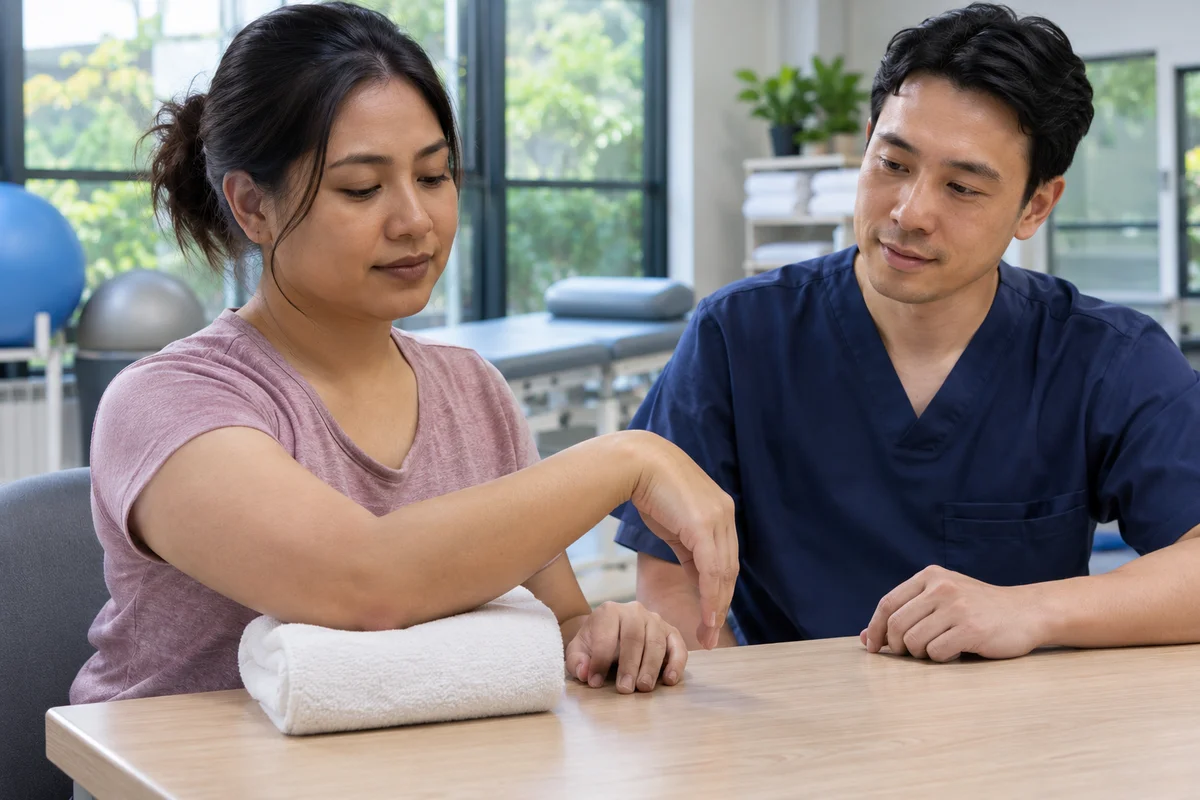
De Quervain's tenosynovitis affects tendons at the thumb side of the wrist and can make lifting, grasping, and thumb movement painful. Physical therapy can help adjust the repeated task and restore suitable movement and strength. A painful thumb stretch should not be repeatedly used as a home diagnostic test. Other wrist problems can look similar, so the examination comes first. ChoosePT patient guide
On this page
Why an ordinary task can become uncomfortable
Tendons are strong cords connecting muscles to bone. Two tendons that move the thumb away from the hand and help straighten it pass through a narrow tunnel at the thumb side of the wrist. Their surrounding sheath normally lets them slide. Irritation and thickening can crowd this space, making grasping, lifting or wrist movement painful. Tenderness and swelling may occur. AAOS explains the anatomy.
Repeated hand use, including lifting a child, is relevant to the history, but it does not explain every case. The assessment also considers other joint, tissue or nerve problems that can cause similar symptoms. New numbness, a recent injury or a changed pattern should therefore be reported rather than treated as proof of this tendon diagnosis. ChoosePT describes the examination.
A task may combine several demands: a wide thumb position, a bent wrist, and a load held away from the body. Understanding that combination is more useful than blaming one device or activity for every case.
Change the task before adding more repetitions
For a painful lift, a therapist can review grip, wrist position, the object's distance from the body, and whether another support can share the load. A smaller object, two-handed method, or different setup may make the task more manageable. These are trials to review, not universal rules for every caregiver or job.
Reducing repeated provocative use can be part of treatment. A prescribed thumb-and-wrist splint aims to rest both areas in a comfortable position, often with the wrist straight. A brace that leaves the thumb free does a different job. Fit, wearing instructions and the tasks you still need to do should be checked, rather than assuming that every wrist brace is interchangeable. AAOS describes splinting.
Restore motion and strength at a tolerable level
Therapy may first restore comfortable thumb and wrist movement, then add resistance to rebuild force for grasping or lifting. Practicing the actual task comes next as symptoms and capacity allow. These steps address different needs: movement range, strength and coordinated hand use. The therapist demonstrates the chosen version, checks your reproduction, and adjusts range, resistance and repetitions. Forcing the thumb into pain is not a necessary stage of recovery. ChoosePT explains these treatment roles.
The plan should show a useful change: turning a key more comfortably, holding a light object, or completing a caregiving task with less provocation. Keep the comparison similar, including the weight held and how often the task is repeated. Review symptoms later in the day as well as during practice. Exercise performance alone does not tell the whole story if the same daily load keeps aggravating the wrist.
How medical care can fit the plan
A medical clinician may discuss a corticosteroid injection to reduce local swelling and pain as part of nonsurgical care. Severe or ongoing symptoms may lead to a surgical opinion; release of the tight sheath aims to create more space for the tendons. These choices address different parts of the problem and are separate from the PT appointment offered here. After a procedure, wound and movement instructions shape rehabilitation. AAOS outlines medical treatment.
A review published online in 2025 included 21 studies with 1,178 adults; 12 studies entered its network comparison. Full-time orthosis use together with corticosteroid injection ranked highest for pain and function. The network combined direct and indirect comparisons, so it was not one trial testing all options against each other. These findings can inform a medical discussion about splinting and injection alongside changes in hand use.
A recent fall with marked pain needs assessment. A misshapen wrist or inability to move the wrist, hand or fingers calls for emergency care. Spreading redness or fever needs prompt medical advice rather than an assumption of overuse. New numbness or a changing symptom pattern also deserves reassessment. MedlinePlus explains when wrist symptoms need care.
Make hand use manageable again
At Wongs Acupuncture & Angel Alliance Physical Therapy, physical therapy connects examination findings with task changes and progressive exercise. A separate acupuncture consultation can review symptom-care options alongside that plan. The goal is to make your actual hand activities more comfortable, using the response to lifting, gripping and other needed tasks to guide the next adjustment.
OUR LOCATIONS
Choose a clinic.
Choose a convenient location to discuss your needs or arrange a visit.