
HEALTH JOURNAL
EM Sella for Bladder Symptoms: Assessment and Your Manhattan Visit
Wongs Acupuncture & Angel Alliance Physical Therapy · · Updated
EM Sella is a seated electromagnetic stimulation service that can be discussed after reviewing your urinary symptoms and health history. At Wongs Acupuncture & Angel Alliance Physical Therapy, this service is available at the Manhattan office.
This guide explains how to prepare for that conversation, what a seated appointment involves and how to review changes. It accompanies the EM Sella service page. It is useful to separate three questions: what is causing the leakage, whether this particular service is suitable, and what other care you may need.
On this page
- Describe when leakage happens
- Explain the effect on an ordinary day
- Prepare a bladder diary if requested
- Bring your medical and treatment history
- Recognize symptoms that need medical attention
- Understand the seated appointment
- Distinguish induced contractions from active training
- Understanding specialist pelvic health care when needed
- How do urgency and leakage guide the consultation?
- Complete equipment-specific screening
- Agree on a review plan
- Keep expectations connected to your own plan
- Use the diary to prepare a focused assessment
- Keep a home plan separate from the equipment schedule
- Plan the Manhattan visit
- Plan the visit and any insurance checks
- Assessment, screening and review
Describe when leakage happens
Urinary incontinence means urine leaks when you do not intend it to. Stress incontinence is leakage with pressure from coughing, laughing, jumping or lifting; “stress” here does not mean emotional stress. Urgency incontinence follows a sudden strong need to urinate, and mixed incontinence includes both. Difficulty emptying can cause overflow leakage; infection or a new medicine can also cause temporary symptoms. These patterns need different assessment rather than a single assumption that every bladder concern needs stronger muscles.
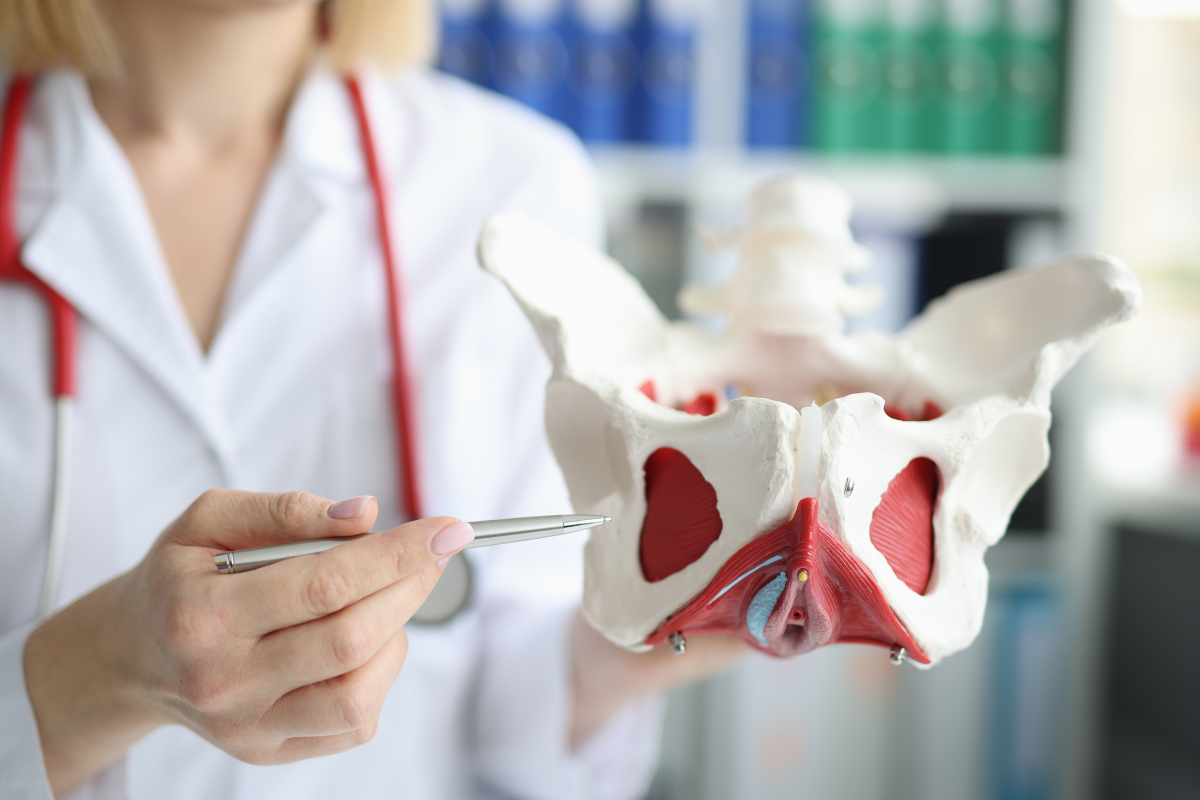
The MedlinePlus urinary incontinence overview explains these types and treatment choices. The pelvic floor supports pelvic organs and helps maintain closure against leakage; urination also requires the right muscles to release in coordination with the bladder. NIDDK’s pelvic floor explanation describes this support and active contraction-and-relaxation training. Childbirth history or age alone does not establish the cause of a new symptom.
Explain the effect on an ordinary day
Tell the clinician which situations are most disruptive: an exercise class, a commute, sleep or reaching the bathroom in time. Explain how often the problem occurs and what you have changed to accommodate it. The aim is to understand the everyday task behind the symptom, not to judge you for needing pads or planning around bathrooms.
A concrete example also gives the follow-up conversation a starting point. If the main concern is leakage during a familiar activity, record that activity and the circumstances. An overall impression can be helpful, but it becomes more informative when you can explain what changed in the task that matters to you.
Prepare a bladder diary if requested
Your health professional may ask you to record drinking, urination and leakage for several days. Follow the requested format and include the time, drink and urine amounts when requested, relevant activity and any urgency. The MedlinePlus overview explains how a diary can contribute to assessment. Bring the real pattern rather than trying to create a perfect-looking record.
Do not deliberately drink much less simply to reduce the number of entries. If you cannot measure an amount or miss an entry, note that instead of guessing. A usable record supports a discussion; it is not a test you need to pass before asking for care.
Bring your medical and treatment history
Share relevant diagnoses, childbirth history, operations, prescribed medicines and current treatments. Mention when the symptoms began and whether a medication or another health change occurred around that time. Bring existing reports if they are available, while recognizing that the clinician may need an updated assessment.
Explain what you have already tried and what happened. This might include guided exercises, bladder training, medicines or an earlier procedure. Include difficulties following an exercise plan as well as any change in symptoms. That information helps the responsible professional understand what the next appointment should address.
Recognize symptoms that need medical attention
Painful urination, blood in the urine, fever or new difficulty passing urine should be raised promptly with an appropriate medical professional. The NIDDK symptom guide highlights blood in urine, infection symptoms and inability to empty the bladder as reasons for timely care. Do not assume that an equipment appointment is the right response to a new urinary symptom. When arranging care, describe these details so the team can help direct the next step.
A routine service inquiry should not delay urgent assessment when you are unwell or unable to urinate. The purpose of screening is to connect the symptom with the right care. A past episode of leakage and a new episode with pain or fever may require different decisions.
Understand the seated appointment
For this service, you remain clothed and sit on the chair as instructed. Magnetic pulses stimulate the pelvic floor musculature and produce repeated involuntary contractions; the FDA’s public description of a pelvic-floor chair device explains this type of stimulation through clothing. “Non-invasive” describes stimulation without an incision or inserted probe; it does not by itself mean that pelvic-organ support or a prolapse has been structurally repaired. The responsible professional should identify the actual equipment, explain positioning and settings, and agree how you can report discomfort, request an adjustment or stop. A stronger contraction is not automatically a better urinary outcome.
Follow the actual clinic instructions rather than instructions for a different chair seen online. If a position is uncomfortable, say so. The session should include a clear way to request an adjustment or stop.
Distinguish induced contractions from active training
A contraction produced by equipment and learning to actively contract, relax and coordinate muscles are different processes. A count of contractions does not describe all the skills involved in everyday bladder control.
After assessment, active practice may focus on finding the intended pelvic floor contraction, holding it as prescribed and then fully releasing, with appropriate coordination during daily tasks. Bladder training instead works on a planned urination schedule adjusted from the diary. NIDDK describes these distinct approaches. Do not routinely practice by stopping urine midstream, and do not add more contractions when a movement hurts or relaxation is unclear. Medicines or other treatment may also be needed for the cause; the chair does not automatically replace them.
A randomized trial published in July 2026 by a team from Türkiye included 44 women with stress urinary incontinence. Both groups received supervised pelvic floor training for eight weeks; one group also received electromagnetic chair treatment. The combined group had better post-treatment muscle-activity, symptom and quality-of-life scores. This was an added-treatment comparison, not proof that a chair replaces active training. Its findings concern those women and the post-treatment assessment, not every cause of leakage or a guaranteed individual course.
Understanding specialist pelvic health care when needed
An EM Sella booking is not automatically a comprehensive specialist pelvic floor physical therapy evaluation. The availability of general physical therapy at a clinic does not establish every pelvic health specialty.
If another clinician is already coordinating your urinary care, share the proposed service with them. You can discuss complementary appointments while keeping a clear understanding of who is responsible for diagnosis, prescriptions and follow-up.
A clear account of how urgency, nighttime urination or leakage affects daily life helps the team arrange a focused consultation.
How do urgency and leakage guide the consultation?
Describe the symptom with the greatest daily impact: sudden urgency, frequent bathroom trips, nighttime waking or leakage with coughing or activity. The diagnosis, bladder diary and medicine list help the team confirm the next assessment and service arrangements.
This guide describes the Manhattan EM Sella equipment service and preparation. Equipment-induced pelvic-floor contractions, active contraction and relaxation exercises, and an acupuncture inquiry follow their respective goals and actual service arrangements.
For a separate acupuncture inquiry, share the assessed condition, symptom goal and medical plan so the team can check an appropriate appointment. Confirm any specialist pelvic-floor service before booking.
Follow-up reviews daily activity, urgency or leakage changes alongside exercises, medicines and drinking arrangements. New painful urination, blood, fever or inability to urinate calls for the medical action described earlier in this guide.
Complete equipment-specific screening
Before booking, disclose possible pregnancy, implanted electronic devices, metal implants, relevant operations and other health conditions. The clinic must resolve compatibility and exclusions against the actual equipment instructions and your circumstances before treatment. Do not start while an important safety question remains unresolved or assume that lower intensity makes an implant compatible. An advertisement for a different chair cannot establish suitability.
Screening may require clarification from another treating professional. A confirmed appointment should reflect that review rather than leave important compatibility questions until you are already sitting in the chair.
Agree on a review plan
Return to the original leakage pattern, diary and effect on everyday activities. Discuss any unwanted symptoms as well as the changes you hoped to see.
Record other changes made during the same period, including exercises, medicines or drinking habits. This gives the review context. The feeling of a strong contraction during a session is different from a change in leakage during daily life, and neither should be substituted for the other when discussing the outcome.
Keep expectations connected to your own plan
A course described in a study or an advertisement does not create a fixed number of appointments that guarantees an individual result. You should be able to understand the purpose of each stage.
If the original problem persists, explain it directly rather than assuming more intensity or more sessions must be the answer. Follow-up can lead to a revised plan, further assessment or a different option, while considering time and comfort.
Use the diary to prepare a focused assessment
Write down the circumstances of an episode in ordinary language: whether you were coughing, exercising, trying to reach the bathroom or asleep. Add the approximate time and any urgency rather than recording only the number of pads used. If you use a pad or another aid, explain how and when you use it; the clinician can tell you which observations are useful for your particular review.
The diary contributes information; it does not establish a diagnosis or confirm that an equipment service is appropriate.
Keep a home plan separate from the equipment schedule
Explain pain, difficulty finding the intended movement or uncertainty about fully relaxing. NIDDK’s exercise guidance distinguishes correct muscle use from squeezing the abdomen or thighs and warns that overdoing exercises can cause straining with urination or bowel movements. The amount, hold time, rest and review point should follow your assessed plan. Do not add repetitions simply because a chair session produced strong contractions. Active practice and the device each need a separate purpose.
At follow-up, bring what you actually managed rather than what was written on the original plan. A task may be difficult because the instructions were unclear, the schedule was impractical or a symptom changed. Naming the obstacle helps the responsible professional decide whether teaching, the starting amount or another part of care should be reviewed. Do not repeatedly practice an uncomfortable movement just to complete a checklist.
Plan the Manhattan visit
Wongs Acupuncture & Angel Alliance Physical Therapy currently offers EM Sella at Manhattan: 425 5th Ave, Unit Office 4th FL, New York, NY 10016. If you are traveling from Forest Hills or Great Neck, confirm a Manhattan appointment for this specific service before arranging your journey. Selecting a clinic location alone does not select the equipment service.
When contacting the office, explicitly say that you are asking about EM Sella. Confirm the responsible professional, appointment length, preparation instructions and follow-up contact. Mention a mobility or access need beforehand so the office can explain the practical arrangements for your visit.
Plan the visit and any insurance checks
Clarify appointment timing, how you should describe your response between visits and whom to contact if your schedule changes. Discuss any practical difficulty following the proposed plan so the team can explain the next step before you arrange further appointments.
If you intend to use insurance, check benefits for the exact service and provider. A clinic accepting an insurance plan does not mean that every equipment service is covered. Bring the information needed for a specific inquiry so the office can check the relevant requirements.
Assessment, screening and review
The assessment distinguishes the leakage pattern, reviews health history and completes screening for the actual equipment. A bladder diary or activity record gives a baseline for comparing changes. The plan explains how the appointment fits other pelvic-floor care, when to review it and how to report a new symptom.
A clear assessment and review plan keep the appointment centered on daily needs. The main EM Sella page provides the current service entry point, and the Manhattan clinic page provides contact and travel details.
OUR LOCATIONS
Choose a clinic.
Choose a convenient location to discuss your needs or arrange a visit.