
HEALTH JOURNAL
Physical Therapy for FAI: Movement Goals and Progress
Dr. Wei (Sean) Li · · Updated
Physical therapy for femoroacetabular impingement syndrome, often called FAI or hip impingement, aims to improve movement, strength and the activities your hip can tolerate. It can help you find a manageable way to move and build capacity. It does not reshape the bones. The useful plan starts with your symptoms and examination, then changes according to your response.
This guide concerns nonsurgical rehabilitation for adults with symptomatic FAI. Recovery after hip arthroscopy, hip osteoarthritis, instability and a new traumatic injury need different decisions.
On this page
- Does a scan showing impingement explain all hip pain?
- What does nonsurgical physical therapy work on?
- How should you change an activity that causes pinching?
- Which exercises belong in your home program?
- How can you tell whether rehabilitation is helping?
- What if surgery is being discussed?
- When should medical assessment come first?
- Arrange an assessment around your activity goal
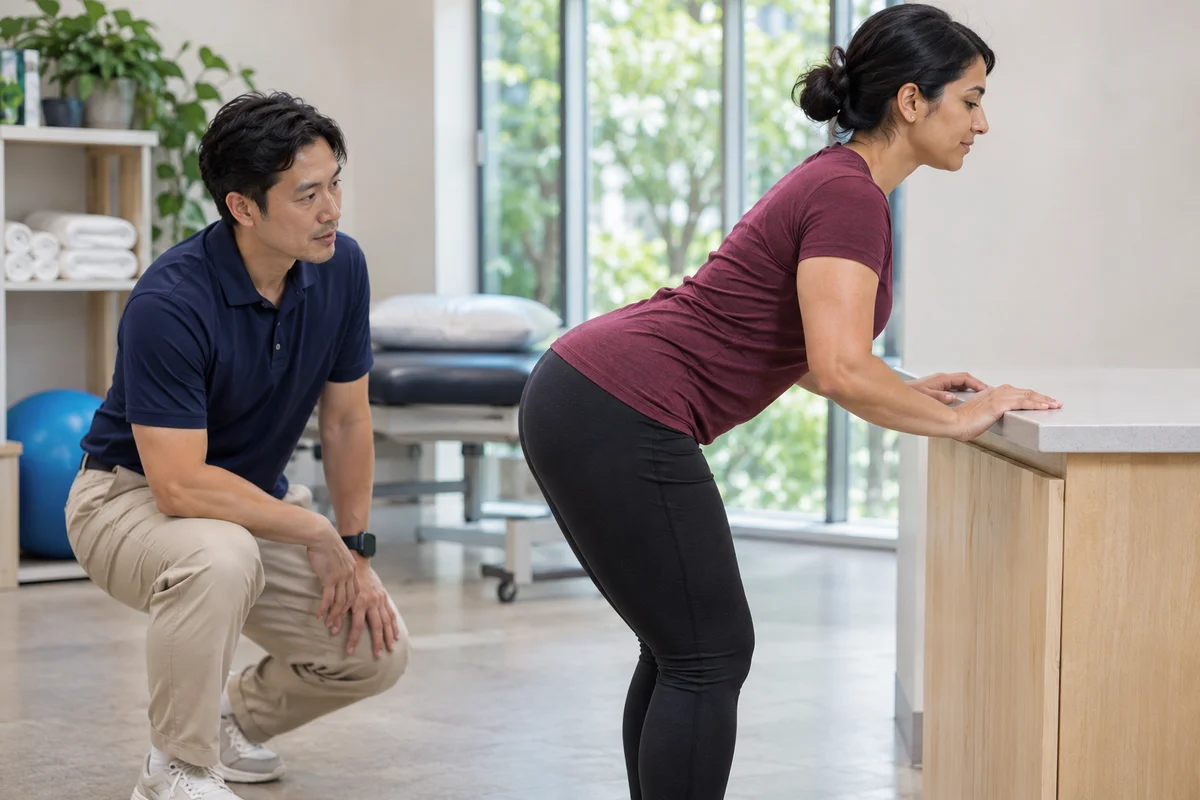
Does a scan showing impingement explain all hip pain?
No. In FAI, the shape of the upper thighbone, the hip socket or both can contribute to early contact during movement. But a shape on an image is different from a symptomatic disorder. The Warwick international agreement defines FAI syndrome through a combination of symptoms, clinical signs and imaging findings.
The hip is a ball-and-socket joint: the upper end of the thighbone forms the ball, and part of the pelvis forms the socket. AAOS describes cam and pincer shapes. A cam shape is less round around the ball; a pincer shape has extra coverage at the socket rim. Both can be present. These shapes can bring structures into contact earlier during a movement, but the symptoms and examination still determine whether the finding is clinically relevant.
Describe where you feel pain and which tasks provoke it. Groin pain, stiffness or discomfort with turning, squatting or prolonged positions may be relevant, but those symptoms do not diagnose FAI by themselves. The assessment also considers other hip problems and pain arising from the back or pelvis. A painful movement test or an MRI label should be interpreted within that broader picture.
Existing imaging and previous treatment are interpreted alongside symptoms and examination to support the diagnosis and identify findings that change rehabilitation. Repeatedly producing a sharp pinch is unnecessary to establish that the hip needs attention.
What does nonsurgical physical therapy work on?
The therapist identifies limitations that connect to your goals: comfortable movement, hip and trunk strength, coordination, or tolerance for a particular activity. For example, getting out of a low chair and returning to a demanding workout are different tasks. They may require different starting positions, movement ranges and loads.
ISHA’s physiotherapy consensus describes strengthening, comfortable range-of-motion work and neuromuscular control for FAI: muscles working together to control position during movement, while avoiding additional joint irritation. Hands-on treatment may be included when appropriate. The starting level and exercise sequence follow the person’s movement findings and response, rather than a single routine for everyone.
Comfortable motion practice addresses a different limitation from strengthening or practicing control during a task. Improving those abilities does not mean that the underlying bone shape has disappeared.
How should you change an activity that causes pinching?
Start by describing the exact situation: the depth of a squat, the height of a chair, a turn during sport or how long you have been sitting. Your therapist can help identify a less provocative version and decide which demands to rebuild. This is more useful than applying a permanent rule against every squat, bend or sport.
For example, if a deep position repeatedly causes a sharp pinch, do not keep forcing that range as a stretch. Discuss a different starting position, smaller movement or change of activity. The aim is to keep an appropriate amount of useful movement while reducing repeated irritation. The right adjustment depends on the examination and the task.
Which exercises belong in your home program?
A useful program explains the chosen movement, its purpose, the amount to practice and the response that should lead you to change or stop. The categories may include comfortable hip movement, strengthening around the hip and trunk, and practice of control during a relevant activity. They are not interchangeable simply because all are labeled hip exercises.
Demonstrate unfamiliar exercises back to the therapist. Confirm the range, resistance, support and frequency rather than borrowing the hardest version from an online routine. An exercise PDF can help you remember instructions, but it cannot decide which version fits an unassessed hip. Our home-exercise guide explains how to organize those details.
Report the rest of your day’s activity too. A manageable exercise session followed by a long commute and a workout may produce a different response from the exercises alone.
What can selected hip-strength exercises look like?
Examples of muscle-training movements appear in AAOS’s hip conditioning guide and hip bridge instructions. A therapist can select suitable versions for your hip, demonstrate them and observe you repeat the steps. Range, hold time, resistance, repetitions and frequency follow the assessment; do not force a sharp pinch or use the hardest version to test the joint.
- For side-lying hip abduction, lie on your side with the lower leg bent for support and the leg to be trained on top. Keep the top leg straight without locking the knee, slowly lift it toward the ceiling within the selected range, then lower with control. Keep it pointing forward rather than turning it to gain height.
- For a bridge, lie on your back with knees bent and feet flat. Gently tighten the abdominal and buttock muscles, lift the pelvis to the selected comfortable height, then lower slowly. Keep the neck relaxed and avoid adding an exaggerated back arch.
The side-lying movement trains muscles around the outer hip; the bridge trains the buttock and back-of-thigh muscles while you control the trunk. These capacities support everyday movement, but the exercises do not reshape the hip bones. Progress is a better-controlled or better-tolerated task at a comparable demand; increased range or resistance is considered after reviewing pain and the later response.
How can you tell whether rehabilitation is helping?
Choose a few activities you can compare consistently. Track what you manage and how the hip responds during and after the task. Pain, movement and strength are related observations, but one does not replace all the others.
| Observation | Useful information to bring |
|---|---|
| A familiar daily task | Whether sitting, getting up or walking is easier, harder or unchanged. |
| Activity demand | The actual range, resistance, duration or training completed. |
| Response | When discomfort appears, whether it settles and whether ordinary activity becomes harder afterward. |
Agree on a review point. If the same limitation persists, symptoms worsen or you cannot use the program, discuss a change or further medical assessment. Repeating an aggravating routine without reviewing the diagnosis and load is not meaningful progression.
What if surgery is being discussed?
Persistent symptoms can lead to an orthopedic discussion about the diagnosis, activity demands and available options. Needing that conversation does not mean you failed an exercise test. Bring the goals you still cannot meet and the treatment you have tried.
If you have already had hip arthroscopy, use the operative instructions. Labral treatment, cartilage procedures and weight-bearing restrictions can change rehabilitation. A nonsurgical FAI guide should not be used as a postoperative protocol.
When should medical assessment come first?
Seek urgent medical advice for sudden severe hip pain without an injury, or a hip that becomes hot and swollen, particularly with fever or feeling unwell. Severe pain after a fall, inability to walk or bear weight, or loss of sensation after an injury needs emergency assessment. The NHS adult hip-pain guidance distinguishes these warning signs from routine rehabilitation questions.
Arrange an assessment around your activity goal
Wongs Acupuncture & Angel Alliance Physical Therapy offers physical therapy in Manhattan, Forest Hills and Great Neck. Bring relevant reports and one or two tasks you want to improve. For a pain concern, a separate acupuncture assessment can also be discussed in the context of your diagnosis and rehabilitation goals.
OUR LOCATIONS
Choose a clinic.
Choose a convenient location to discuss your needs or arrange a visit.