
HEALTH JOURNAL
Gait and Balance Physical Therapy: Building a Safer Walking Plan
Dr. Wei (Sean) Li · · Updated
Physical therapy can assess how you walk and keep your balance, then use supported, individually chosen practice to address the difficulties found. For adults 65 and older living in the community who have increased fall risk, exercise programs can reduce falls. That evidence supports a tailored plan; it does not promise that a particular person or course of treatment will prevent every fall.
This guide is for adults with unsteadiness, walking difficulty, falls or near-falls. A sudden new problem, a fall-related injury or symptoms requiring medical assessment should be addressed before routine exercise. Stroke, Parkinson’s disease and other diagnosed conditions may require their own rehabilitation plan.
On this page
- What does gait analysis mean in physical therapy?
- What should you tell the therapist?
- Can PT help prevent falls in older adults?
- What is gait training, and how do balance exercises fit?
- Is walking more enough?
- Which balance exercises should you do at home?
- What else belongs in a fall-risk discussion?
- How should progress and provider fit be reviewed?
- When does a fall or sudden change need urgent help?
- Plan an assessment around the activity that feels unsafe
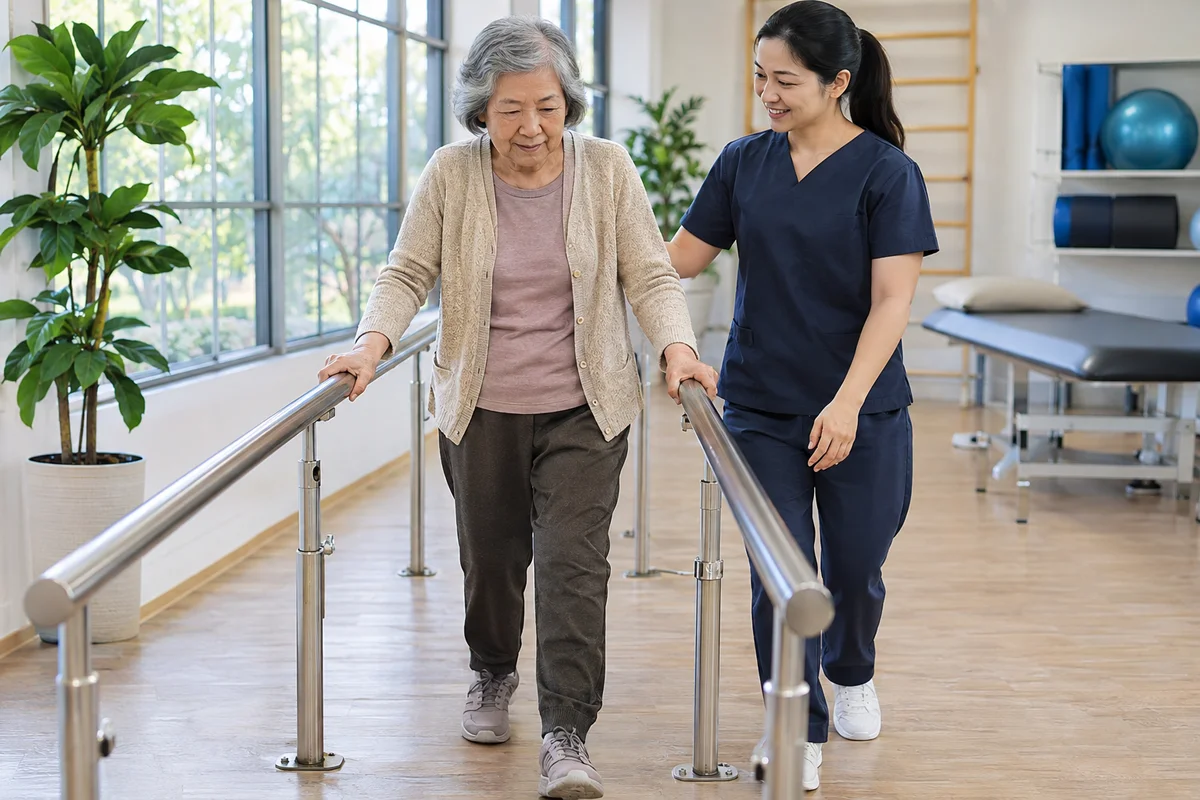
What does gait analysis mean in physical therapy?
Gait is the way you walk. A clinical gait assessment examines the walking task and the factors affecting it. The therapist may observe pace, step length, steadiness, turning and how you use your usual walking aid. Rising from a chair, walking and sitting again can also show where help or further assessment is needed.
For example, the CDC’s Timed Up and Go assessment includes observation of posture, walking and turning, with the clinician staying nearby for safety. Such a test is part of an assessment, not a home challenge or a complete diagnosis on its own.
“Gait analysis” can also describe specialized testing using instruments. General PT information does not establish that a particular clinic has a gait laboratory.
NIDCD explains that balance depends on information from the eyes, the inner-ear balance organs and sensation from the legs, together with the muscles’ response. Weakness, altered sensation, dizziness on standing or a medication effect can therefore lead to different walking problems. Assessment helps identify which part of the task needs training and which problem needs other medical care.
What should you tell the therapist?
Describe falls and near-falls, including a stumble you caught before reaching the floor. Explain where they happen: getting out of bed, turning, using stairs or walking outdoors. Mention dizziness, pain, fatigue, changes in sensation and fear that makes you avoid activity. Bring your medicine list, relevant diagnoses and your usual walking aid.
The ChoosePT falls guide describes checking walking, balance and leg strength alongside medical history and other risks. Depending on the findings, the treating team may need to review blood pressure with position changes, vision, footwear, medicines or the home environment. Some issues need another clinician’s assessment. Do not stop a medicine on your own because it might affect balance.
Can PT help prevent falls in older adults?
The 2024 USPSTF recommendation supports exercise for community-dwelling adults 65 and older at increased fall risk. Programs commonly included gait, balance and functional training, often with strength work. A previous fall or problems with mobility can help identify increased risk. The review considered 37 exercise trials involving 16,117 participants, mostly in supervised group programs.
The pooled findings showed fewer falls and fewer people having a fall, as well as fewer injurious falls. They did not show a significant reduction in fall-related fractures or deaths from any cause. These are different outcomes: reducing falls is a useful aim even though it does not establish a reduction in every consequence of falling.
The recommendation separately advises an individual decision about a wider, multifactorial assessment and intervention package. This means reviewing several possible risks and selecting actions for the issues found, rather than offering every test or referral to everyone. The decision considers prior falls, other medical conditions and the person’s priorities. These general findings do not substitute for condition-specific stroke or Parkinson’s rehabilitation evidence.
Study programs differed and often used group exercise. They do not establish one clinic schedule or exercise dose. The selected task, assistance and follow-up should fit the person’s assessment and daily mobility goals.
What is gait training, and how do balance exercises fit?
Gait training means practicing walking-related tasks with a purpose based on the assessment. Balance work challenges the ability to remain steady or recover stability at a level that can be practiced safely. Strength work may help with tasks such as standing up, supporting the body during a step or continuing an activity.
| Difficulty | Possible focus of supervised practice |
|---|---|
| Getting up and starting to walk | A manageable chair-rise and first-step sequence, using appropriate support |
| Feeling unsteady while turning | Controlled changes of direction with the assistance needed |
| Limited standing balance | A selected standing task with a safe setup and support |
| Difficulty walking with a usual aid | Review of its use and walking practice matched to the person |
These examples explain treatment goals, not a circuit for everyone to attempt. The therapist chooses the starting task and support, then reviews whether and how to make it more demanding. A generally healthy older adult starting a fitness class has different needs from someone who is repeatedly losing balance.
An example: learning a supported chair-rise
A chair-rise is one example a therapist may select after checking standing ability and fall risk. Johns Hopkins’ public example is intended for people at low fall risk who can stand without another person’s support; someone needing hands-on assistance requires an adapted, supervised plan.
Sit near the front of a firm chair that cannot slide or roll, with both feet flat on the floor. Keep an agreed sturdy support surface within reach.
If the selected version uses the hands, place them on the chair’s arms or seat before beginning. This can assist standing and sitting; keep the agreed support.
Bring the chest forward over the toes to shift weight, then rise slowly into a stable standing position.
Lower slowly to the chair with control. The therapist sets the amount, rest and assistance and observes how you reproduce the task.
This practices leg force, forward weight transfer and controlled standing and sitting. Knee, back or hip pain, loss of balance or a need for more help calls for stopping and changing the plan. The example does not assign the source’s repetition schedule to everyone.
Is walking more enough?
Walking can be a useful activity, but simply increasing distance does not address every balance problem. ChoosePT cautions that starting a walking program with poor balance can increase fall risk. Discuss the route, support, fatigue and any help needed before adding distance.
Doing two things together, such as walking while carrying something, may also need assessment and guided practice. It should not become an extra challenge added at home before you know it is appropriate. The aim is useful, safe activity rather than accumulating steps at any cost.
Which balance exercises should you do at home?
Use versions already demonstrated by the therapist and practiced by you. The instructions specify stable support, footwear, space, amount, frequency and whether someone must be present. Show the task back so the therapist can check the setup and explain when to stop, simplify or contact the team. A “senior” label cannot select an exercise for an individual’s balance, strength and health.
Our home-exercise guide explains these instructions. The plan identifies which parts are safe independently. If the home setup cannot be reproduced, the therapist adjusts it before substituting a harder version.
What else belongs in a fall-risk discussion?
Relevant changes may include better lighting, clearing trip hazards, suitable footwear or using the walking aid recommended for you. Vision problems, dizziness on standing and medicines may require medical or pharmacy review. NHS falls advice recommends discussing medicines that may affect balance with a clinician or pharmacist.
Arrange the help appropriate to the issue rather than assuming exercise addresses every cause. A discussion of home safety does not establish that a clinic offers home visits, and a general balance assessment does not establish a vestibular (inner-ear balance) or neurological specialty service.
How should progress and provider fit be reviewed?
Choose a meaningful task, such as getting to the bathroom, turning in a familiar space or completing a usual short walk. Track difficulty, help needed and any falls or near-falls. Report new events even if an exercise feels easier. Review can change the task, support, challenge or referral plan; one improved test score does not guarantee safety everywhere.
A gait and balance assessment links the walking difficulty to appropriate practice, reassessment and a usable home plan. Transport, stairs, access with a walking aid and any support person are part of making attendance workable. The office can confirm the requested service; a general service label does not identify every item of equipment or specialty assessment.
When does a fall or sudden change need urgent help?
After a fall, get emergency help if you may have injured your head, back, neck or hip, or cannot get up. Do not make repeated attempts to stand or ask someone to lift you when injury is possible. A fall with pain, possible injury or feeling unwell needs prompt medical advice. The NHS falls guidance explains these distinctions.
Sudden facial drooping, one-sided weakness or speech difficulty needs emergency help for possible stroke, even if the signs stop. The American Stroke Association advises calling 911 immediately for stroke warning signs. Do not wait for a routine gait appointment.
Plan an assessment around the activity that feels unsafe
Wongs Acupuncture & Angel Alliance Physical Therapy provides physical therapy in Manhattan, Forest Hills and Great Neck. Bring your medicine list, usual aid and a description of walking difficulties, falls or near-falls. If pain also limits activity, a separate acupuncture assessment can be discussed within your overall care plan.
OUR LOCATIONS
Choose a clinic.
Choose a convenient location to discuss your needs or arrange a visit.