
HEALTH JOURNAL
When Stress Leaves You Tense, Plan for Comfortable Touch
Ben Wong ·
Massage may support relaxation and ease muscle discomfort when stress leaves you physically wound up. Start with a specific aim: a more comfortable neck and shoulders, less constant bracing or the ability to rest in a supported position. Feeling calm or even drowsy afterward is an experience; whether daily life improves still needs its own review. Mayo Clinic describes stress relief and relaxation among reasons people use massage. Source
On this page
- Why stress can feel physical
- Does Chinese massage mean strong pressure?
- What may explain feeling sleepy after massage?
- Choose touch and position that allow you to settle
- Drowsiness during a session is different from treating insomnia
- Review what changes after the quiet part is over
- Health history matters even for a gentle appointment
- Plan a comfort-focused visit
Why stress can feel physical
Stress is a physical as well as emotional response to a challenge. During the fight-or-flight response, the body prepares to act: muscles tense, breathing and heart rate rise, and sweating may increase. An occasional response is part of coping; persistent stress can become disruptive. The US National Center for Complementary and Integrative Health (NCCIH) describes this response. Stress and the body
That gives a reason to discuss physical comfort when you feel wound up, but it does not diagnose every sore area as stress. New injury, persistent pain or neurological symptoms needs the appropriate assessment. A relaxing session should not be used to explain away a new medical problem.
Does Chinese massage mean strong pressure?
Chinese massage can refer to different hands-on approaches, including tuina. Tuina is a traditional Chinese manual-treatment approach that selects methods in relation to the concern and body area. Examples include pushing strokes, kneading and rolling contact; their names describe how contact is made, not a requirement to cause pain. A Chinese health-service explanation describes these varied methods. Tuina methods
Tuina considers the symptom history and other assessment findings within its traditional framework; meridians are traditional concepts linking body regions and points. A relaxation-focused appointment still needs a practical goal and tolerable pressure. A label such as Chinese, medical or natural does not determine the force, prove a hormone effect or remove the need to consider health history. The approach should fit the person and purpose rather than require everyone to receive the same deep work.
What may explain feeling sleepy after massage?
NCCIH describes the relaxation response as involving slower breathing and a reduced heart rate, and includes massage among practices that can produce this response. Moving from an alert, braced state into a quiet, supported period of rest offers a plausible explanation for feeling sleepy during or after a comfortable session. It does not identify one chemical cause in that particular person. Relaxation response
Some people feel calm without becoming sleepy. Falling asleep is not required for the session to have met a comfort goal, and drowsiness is not a measure of treatment depth. Cortisol is a hormone involved in the stress response. Feeling drowsy cannot tell you its level, prove that hormones have been balanced or show that toxins were removed. Compare the comfort and daily-life goal rather than trying to become as sleepy as possible.
Choose touch and position that allow you to settle
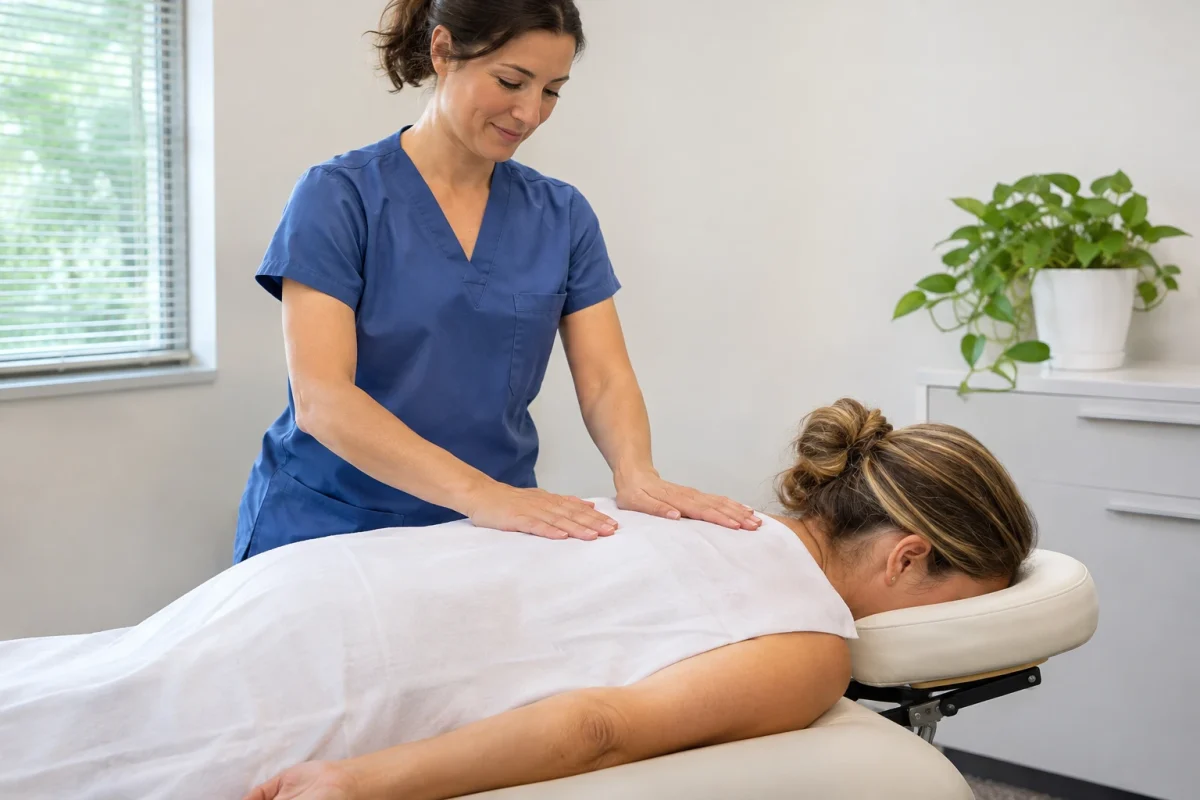
The therapist can use gliding or kneading contact and, when appropriate, more focused pressure on a selected area. Broader contact and deeper or more localized pressure feel different; deeper work is not automatically more relaxing. Notice whether you can breathe comfortably and let the area settle, rather than constantly brace against the contact. Severe pain is not a necessary stage, as Mayo Clinic emphasizes. Source
Position can be adapted too. Side-lying, a chair or pillows may be considered when lying face down is uncomfortable. You can remain clothed or undress only to your comfort, with appropriate covering. Explain sensitive areas, preferred pressure and any skin or scent sensitivities. Oil and lotion are options to discuss, not a requirement for relaxation.
Feedback can be simple: lighter, a different area, another position or a pause. Consent and comfort can change during the appointment. Strong tenderness, sharp pain, unpleasant spreading sensations or skin irritation calls for adjustment rather than endurance. The session should help the chosen comfort aim, not become a test of how much pressure you can tolerate.
Drowsiness during a session is different from treating insomnia
Chronic insomnia involves an ongoing difficulty with sleep, not simply whether you dozed during a massage. Persistent difficulty falling asleep, staying asleep or functioning during the day deserves its own assessment. Massage may fit a relaxation goal within that discussion, but the appointment alone does not establish that the sleep problem has been treated.
The National Heart, Lung, and Blood Institute (NHLBI) describes cognitive behavioral therapy for insomnia, or CBT-I, as a first treatment for long-term insomnia. This is a structured approach that addresses sleep-related thinking, habits and the association between bed and sleep, rather than only providing a quiet place to rest. An individual plan may therefore include care beyond a relaxing massage. Source
Review what changes after the quiet part is over
Before the visit, choose a specific concern such as neck tension while working or difficulty settling after a demanding day. Afterward, compare that concern and a usual activity under similar conditions. Note how long a useful change lasts and whether the session leaves you sore, bruised or less comfortable. Feeling peaceful on the table and managing the rest of the day more comfortably are different outcomes.
Mild next-day soreness can occur, but it is not a required sign of success. New pain, a skin reaction or a worsening task should change the plan. If benefit is only brief, review the aim, pressure, position and other support rather than automatically booking longer or more forceful sessions. Persistent stress, anxiety or depression that is difficult to manage needs appropriate professional care; massage cannot replace mental-health treatment.
Health history matters even for a gentle appointment
Tell the care team about bleeding-related medicines, a recent blood clot, fractures, severe osteoporosis, burns, wounds, pregnancy or other relevant health changes. These can alter whether massage is suitable, the areas included and the type of contact. Gentle or natural does not mean that every health condition is irrelevant. Do not stop prescribed medicines to arrange a session. Source
A new injury or significant new symptoms calls for the appropriate evaluation, not a presumption that stress explains it. If symptoms persist despite a comfortable approach, reassess their cause and the useful next step rather than repeatedly treating the same label.
Plan a comfort-focused visit
Wongs Acupuncture & Angel Alliance Physical Therapy offers medical massage in Manhattan, Forest Hills and Great Neck. A session can start with the tension or discomfort you want to address, then use pressure, positioning and a review plan that fit that aim.
OUR LOCATIONS
Choose a clinic.
Choose a convenient location to discuss your needs or arrange a visit.