
HEALTH JOURNAL
Physical Therapy for Patellofemoral Pain: Goals and Progress
Dr. Wei (Sean) Li · · Updated
Physical therapy for patellofemoral pain usually centers on exercise and education, with activity changes that make the plan usable. The aim is to improve pain and function during tasks such as stairs, squatting, running or prolonged sitting. Exercise selection should follow the assessment, rather than assume that every painful kneecap needs the same stretch, tape or alignment correction.
Patellofemoral pain, sometimes called patellofemoral pain syndrome or runner’s knee, is pain around or behind the kneecap. It can affect people who do not run. This guide concerns nonsurgical care for adults with assessed patellofemoral pain, not every cause of front-of-knee pain.
On this page
- Is patellofemoral pain the same as damaged cartilage?
- What should you tell the physical therapist?
- Which exercises are used for patellofemoral pain?
- Should you stop all activity until the pain is gone?
- What about tape, shoe inserts or hands-on treatment?
- What should a home plan tell you?
- How do you know whether the plan is working?
- When should medical assessment come first?
- Bring a clear activity goal to the appointment
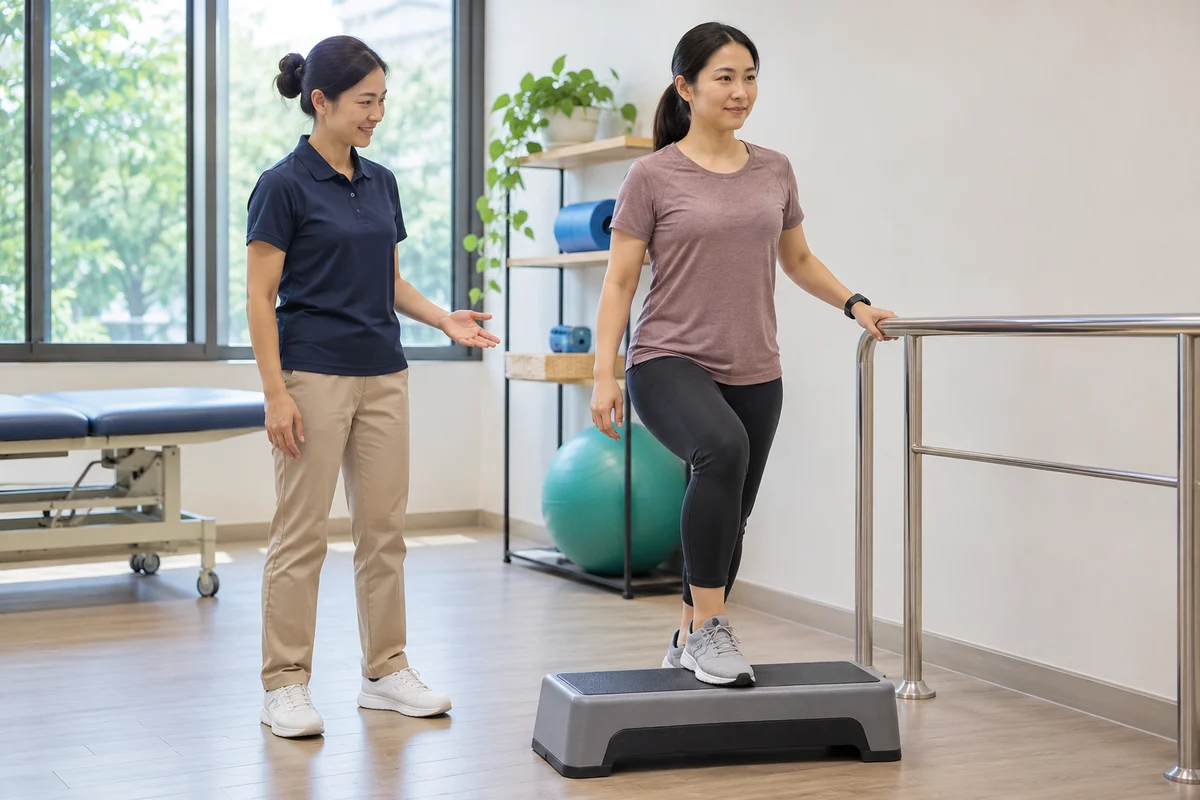
Is patellofemoral pain the same as damaged cartilage?
No. Patellofemoral describes the region where the kneecap and thighbone meet. The kneecap moves in a groove as the knee bends and straightens; smooth cartilage helps the surfaces glide. The AAOS patient guide notes that chondromalacia patella, a change in cartilage under the kneecap, is present in some cases. It is not a synonym for every patellofemoral pain presentation. Symptoms and examination still guide understanding of the pain.
An imaging description alone does not provide an exercise prescription. A dislocated kneecap, an acute ligament injury, osteoarthritis and a recent operation can require different decisions.
What should you tell the physical therapist?
Describe where the pain is and which activity brings it on. Stairs, a deep squat, running and sitting with the knees bent place different demands on the knee. Explain any recent change in training amount, hills, work tasks or repeated bending, along with injury history and previous treatment.
The therapist may assess relevant hip and knee strength, movement and a task such as a squat or step. The purpose is to understand what limits the activity and which starting demand is manageable. A single movement pattern should not be treated as the whole explanation for everyone.
For example, someone whose pain follows a sudden increase in running may need to review the training load. Someone mainly limited by stairs needs a plan that also considers that daily demand. The assessment should connect the exercise to the reason you sought care.
Which exercises are used for patellofemoral pain?
A 2024 best-practice guide, combining research with patient and clinician perspectives, recommends knee-targeted exercise with education as the central treatment. Hip-targeted exercise may also be included, with the combination selected for the person’s presentation.
Knee exercise builds capacity for knee-loading activities; hip work addresses relevant strength and control needs. A supported chair rise, smaller-range squat or other starting task is selected from assessment findings. A movement name does not specify its range, resistance or amount.
The guide’s research synthesis mainly informs short-term outcomes, defined as less than three months from treatment commencement. It found no high-quality trials adequately testing interventions beyond that period. This is a limitation of that evidence base, not proof that longer-term improvement is impossible. Some recommendations also draw on patient preferences and expert reasoning. The evidence supports an active, individualized plan, not a guaranteed result from one favorite exercise.
What do a knee and a hip exercise actually involve?
The AAOS knee conditioning and hip conditioning materials describe partial squats and side-lying hip abduction. These are possible actions to select and adapt, not a complete patellofemoral program. The therapist sets support, depth, resistance, repetitions and frequency from your assessment. A painful loaded bend may need a smaller range, a different exercise or greater emphasis on suitable hip work.
- For a selected supported partial squat, stand with a stable counter or chair for balance. Move the hips back and bend the knees only to the manageable depth agreed with the therapist, then press through the feet to stand. Keep the movement controlled; do not force a deeper squat to prove progress.
- For selected side-lying hip abduction, lie with the leg to be trained on top and the lower knee bent for support. Keep the top knee straight without locking it and the leg facing forward, raise it slowly within the agreed range and lower with control. Avoid turning the leg or rolling the trunk to gain height.
The partial squat practices knee-and-leg capacity while supporting body weight. The side-lying action practices the outer hip muscles with less demand from a loaded knee bend. Neither corrects every knee’s alignment or proves the cause of pain. Increase a chosen demand gradually and compare the relevant stairs, squat or running task and later symptoms.
Should you stop all activity until the pain is gone?
Discuss which activity is provoking symptoms and how to reduce that demand while keeping a useful amount of tolerable activity. Complete rest and an immediate return to the same workload are not the only choices. Exercise, education and adjustments to the relevant activity should work together.
A change might involve the amount, movement range, resistance or type of activity. For example, reducing a difficult training demand while working on a manageable strength task is different from repeatedly forcing a painful squat.
Remember the demands outside the exercise session. Stairs at home, repeated kneeling at work and a workout can add up. Tell the therapist about the full day so that an apparently simple exercise change is not judged in isolation.
What about tape, shoe inserts or hands-on treatment?
The 2024 guide describes options such as taping, prefabricated foot orthoses, manual therapy and movement or running retraining as supporting interventions selected for a person’s needs and preferences. They are not a requirement for every knee, and their role should be explained.
An adjunct has a task goal, response review and a role alongside exercise. More comfortable movement after taping does not establish permanent correction. The APTA patient guide places exercise at the center, rather than inserts or taping alone.
What should a home plan tell you?
Home instructions specify position, support, range, resistance, repetitions and frequency. The therapist demonstrates unfamiliar movements and observes you repeat them, checking technique and acceptable sensations. The plan explains reducing demand, pausing and contacting the therapist instead of leaving those rules to a general video.
A short, clear plan can be more useful than collecting many exercises. Our home-exercise guide explains how to organize the instructions. Bring practical obstacles to follow-up, including equipment, time or difficulty using the suggested setup.
How do you know whether the plan is working?
Choose a familiar task to compare, such as a usual flight of stairs or sitting through part of the workday. Note the amount completed, symptoms during it and how the knee feels later. Also report what you changed in training or daily activity.
A more comfortable short walk does not establish readiness for running or repeated stairs. Review the activity to regain. Persistent, worsening or unmanageable symptoms call for reconsidering load, exercise selection or diagnosis. There is no universal session count or recovery date.
When should medical assessment come first?
Seek urgent medical assessment for a newly locked knee, marked swelling, a visibly changed knee shape, inability to move or bear weight, or a red or hot knee with fever or feeling shivery. A new significant injury also warrants medical assessment. The NHS knee-pain guidance distinguishes these signs from ordinary self-management questions. Do not assume a new problem must be the same patellofemoral pain already diagnosed.
Bring a clear activity goal to the appointment
Wongs Acupuncture & Angel Alliance Physical Therapy offers physical therapy in Manhattan, Forest Hills and Great Neck. Describe the task that hurts and any recent activity changes. For a pain concern, a separate acupuncture assessment can also be discussed with the current diagnosis and rehabilitation plan in mind.
OUR LOCATIONS
Choose a clinic.
Choose a convenient location to discuss your needs or arrange a visit.