
HEALTH JOURNAL
Physical Therapy for Spondylolysis: Moving Without Rushing Bone Healing
Dr. Wei (Sean) Li · · Updated
Physical therapy for spondylolysis usually combines temporary changes to painful activity with a gradual return to trunk control, strength, and everyday movement. A recent bone stress injury needs a different starting point from an old, stable pars defect. The plan follows the diagnosis and any medical restrictions; it does not begin with repeatedly testing how far the back can bend. AAOS guidance on spondylolysis and spondylolisthesis
On this page
A pars injury is different from a slipped vertebra
The pars interarticularis is a small bridge of bone toward the back of a vertebra. Spondylolysis means a defect or fracture in that bridge. Spondylolisthesis means one vertebra has moved relative to the one below it. The conditions can occur together, but having a pars defect does not by itself establish the amount of slippage or the source of every symptom. Our separate spondylolisthesis page explains the latter condition.
Repeated back extension and rotation can be relevant in sports such as gymnastics. A young athlete with persistent activity-related back pain needs assessment rather than an assumption that the problem is ordinary muscle soreness. Imaging and the clinical history help the medical team distinguish an active injury from a longstanding finding. AAOS guidance on spondylolysis and spondylolisthesis
A bone stress reaction can occur before a fracture line is visible. The Scoliosis Research Society explains that an X-ray may look normal at this stage; other imaging may help the treating team identify an active injury. This is one reason a new sports-related pain problem and an old stable defect may need different protection and rehabilitation.
What protection means in practice
Early protection may mean pausing backbends, heavy lifts, or a particular sport while keeping permitted daily movement. It does not mean that every person needs a brace or complete bed rest. A brace, when prescribed, is part of the medical plan rather than a substitute for knowing which movements are currently allowed.
Protection does not necessarily mean waiting for all pain to disappear before beginning supervised PT. A 2026 US randomized trial studied 64 adolescent athletes with MRI-confirmed active pars stress injury. Both groups stopped sports during rehabilitation. One group began PT within seven days and progressed according to pain and function; the other rested until symptoms settled before beginning PT.
At one month, the early PT group had better pain and disability results. It returned to sport 38 days sooner and had fewer low-back-pain recurrences requiring medical treatment over 12 months, 3% versus 29%. This was a supervised rehabilitation program with return-to-sport criteria, rather than permission to continue a painful sport.
For a student athlete, the relevant problem may be a practice schedule that repeatedly provokes pain. For an adult, it may be reaching overhead at work. Identifying the repeated exposure makes the adjustment more useful than a blanket instruction to avoid all exercise. Scoliosis Research Society guidance
A related MRI analysis from the same trial followed 53 participants with initial and three-month scans. It did not find worse healing findings with immediate PT than with resting before PT. Both reports concern the same study program; they are not two independent trials or proof that every pars injury should follow one timetable. The treating team still determines protection, progression and return-to-sport requirements.
Rebuild control before adding demanding positions
A therapist can work on comfortable hip motion, trunk control, and strength within the permitted range. Early exercises should not repeatedly force the painful extension position. The aim of abdominal training is coordinated support during movement, not gripping the stomach continuously or doing as many crunches as possible. Scoliosis Research Society guidance
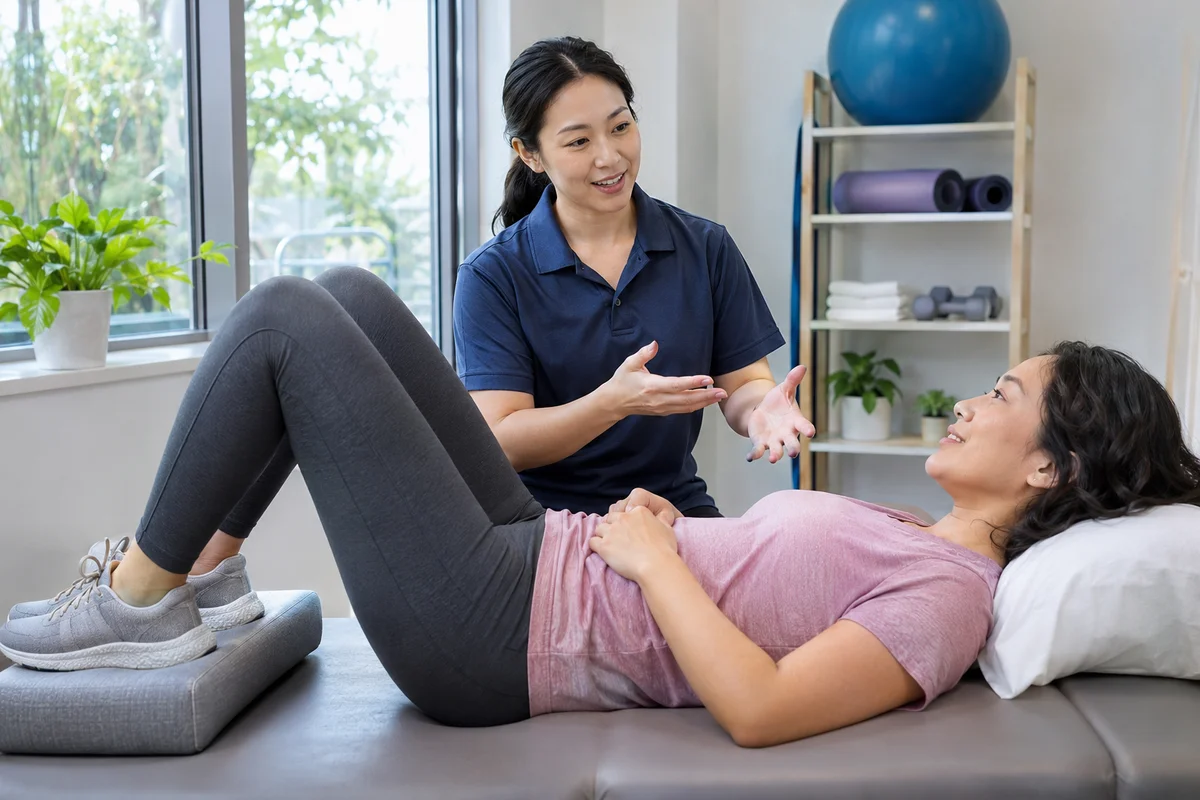
Control, flexibility and strength address different parts of the return to movement. Comfortable hip motion can help a task use the available movement without forcing it all through the lower back. Trunk-control practice teaches you to coordinate support while breathing; strength and endurance work then prepares the muscles for repeated activity. The therapist demonstrates the selected starting position, checks you can reproduce it and explains the permitted range and amount. Review the same task and its later response before adding a new demand.
Progression may move from a supported exercise to standing, carrying, and eventually sport-specific tasks. Being comfortable with one exercise is only one piece of that decision. How the back responds later that day and during normal activities also matters.
Return to sport is a separate decision
Pain relief does not prove that a recent fracture has healed. Return to sport combines the treating team's healing assessment, movement tolerance, and the demands of the sport. A generic number of therapy visits cannot determine clearance. New leg weakness, spreading numbness, or a marked change in walking warrants medical reassessment rather than increasing exercise. AAOS guidance on spondylolysis and spondylolisthesis
At Wongs Acupuncture & Angel Alliance Physical Therapy, a physical therapy assessment can translate existing restrictions into practical movement goals. An acupuncture consultation can address whether symptom-focused care fits the wider plan; it does not replace bone protection or return-to-sport clearance.
OUR LOCATIONS
Choose a clinic.
Choose a convenient location to discuss your needs or arrange a visit.