
HEALTH JOURNAL
What Sports Massage Can Add to an Activity Plan
Ben Wong ·
Sports massage organizes soft-tissue treatment around an activity goal, such as easing familiar muscle tension after training or making everyday movement more comfortable. It is not one fixed technique, and the name does not establish that it will make you faster, stronger or ready to return after an injury. NCCIH includes sports massage among several massage approaches. Source
The practical starting point is the problem that needs attention. Familiar soreness after a harder session, pain that began with a sudden pull, and repeated difficulty tolerating a training load can require different decisions. Massage should fit that decision, with a clear goal and a way to review the response.
On this page
- Sports and medical massage describe different priorities
- An injury history changes the starting point
- Choose contact and pressure for the goal
- Recovery outcomes and performance are different measures
- Massage has a different job from rehabilitation and conditioning
- Review the response before increasing demand
- Connect the activity goal with an appropriate service
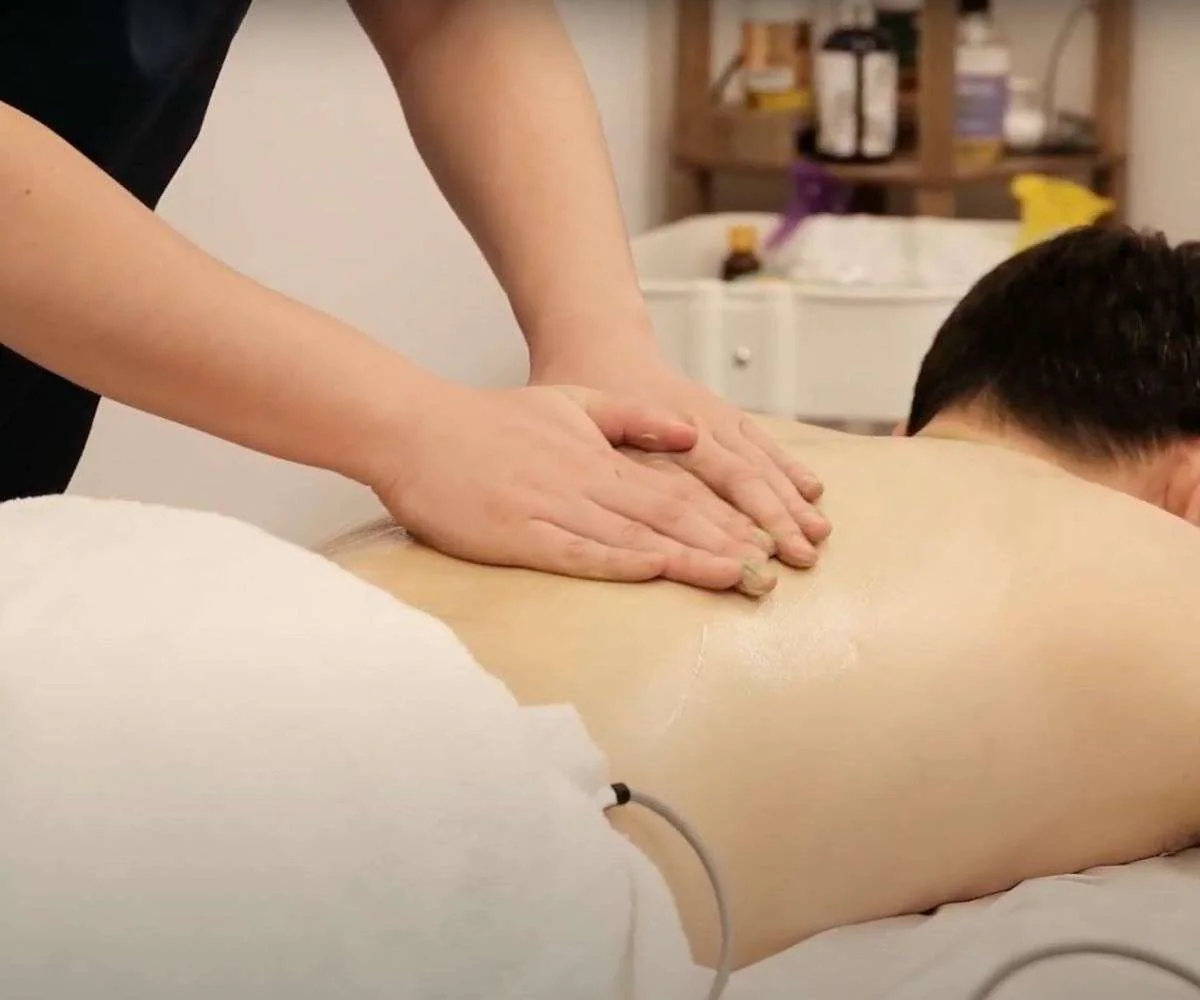
Sports and medical massage describe different priorities
The sports label puts the training or activity context in view. Clinical or medical massage focuses on an assessed symptom or therapeutic goal. Those purposes can overlap: someone with neck discomfort while cycling may need both the activity history and a clear symptom goal. NCCIH describes clinical massage in terms of specific goals, rather than a single mandatory technique. Source
The useful comparison is therefore what will be addressed, which area and pressure are appropriate, and what change would matter afterward. Neither label alone establishes a particular certification, a specialist rehabilitation program or insurance coverage. At this practice, the actual service route is the sports massage page and the medical massage information.
If a Chinese massage method such as Tuina is used, that identifies a technique tradition; the activity problem and treatment goal still need to be specified. A tradition does not remove the need to assess a new injury, choose suitable pressure and review the response.
An injury history changes the starting point
A recent increase in running distance, a different lifting session or a long period standing helps put discomfort in context. When it began also matters: pain during a sudden pull is a different history from soreness noticed after exercise. A fall, bruising, swelling or loss of function changes the assessment; tenderness alone cannot identify the injured tissue.
NIAMS describes evaluating both the injury event and changes in activity, with an examination and imaging when appropriate. Severe pain, swelling or bruising, an obvious deformity, or inability to tolerate weight calls for medical assessment. Working directly and deeply on the sore area should not come before that decision. Source
Choose contact and pressure for the goal
Massage works through contact with soft tissues. Broader strokes can address a larger area, while kneading or more focused contact concentrates attention on a smaller region. These choices change where and how pressure is felt; they do not by themselves demonstrate that a muscle strain has healed. Mayo Clinic describes adapting strokes and pressure to the person’s needs. Source
For example, after a demanding training week, the immediate aim might be to make a comfortable walk or an approved warm-up easier. The therapist can adjust position, support and pressure around that aim. Deep pressure throughout the session is not a requirement. Ask for a change when pressure becomes painful; sharp pain, spreading tingling or new weakness calls for pausing and reassessment.
Recovery outcomes and performance are different measures
A 2020 systematic review and meta-analysis included 29 studies with 1,012 participants. It found small improvements in flexibility and delayed-onset muscle soreness, but did not find improvements in the measured strength, jumping, sprinting, endurance or fatigue outcomes. These group findings do not establish a personal treatment schedule. Source
Delayed-onset muscle soreness means soreness that appears after exercise rather than an immediate injury diagnosis. Feeling less sore may matter to comfort, but it is a different result from running faster, tolerating a higher training load or healing a torn structure. Keep those goals separate when deciding whether massage has helped.
Massage has a different job from rehabilitation and conditioning
A comfortable feeling after massage does not show that you are ready for competition. Returning to activity may require rebuilding strength, range of motion, balance and the demands of the sport. NIAMS describes rehabilitation as a plan to rebuild movement and strength, often with exercises at home as well as in the clinic. Source
Our cupping for muscle tension and aftercare guide covers another approach to exercise soreness. If weakness, repeated symptoms or altered movement keeps limiting training, physical therapy may help assess the loading and rehabilitation plan. Massage can have a comfort goal within that plan, while exercise addresses the capacities the activity requires.
Review the response before increasing demand
Use a familiar, appropriate activity for comparison, such as an ordinary walk, an approved warm-up movement or a routine work task. Compare how it feels before and afterward, whether unwanted soreness develops, and whether the useful change carries into the next day. These are practical observations for review, not a standardized test of tissue healing.
Timing should also reflect the whole training week and your previous response. Repeating a comfortable session is a different decision from trying an unfamiliar, intense technique just before an important event. If relief is brief and the same activity repeatedly provokes symptoms, reconsider the activity demands and assessment rather than simply make the next massage deeper or immediately test a maximum load.
Connect the activity goal with an appropriate service
Recent surgery, blood-thinning medicines, fragile bones, wounds and other relevant health changes affect what contact may be suitable. Mayo Clinic advises medical discussion for bleeding risks, recent clots, broken bones and severe osteoporosis, and avoiding pressure over healing wounds. The plan needs to reflect your actual condition. Source
Wongs Acupuncture & Angel Alliance Physical Therapy offers massage care in Manhattan, Forest Hills and Great Neck. An acupuncture consultation can also be considered for an assessed pain concern. A useful first visit connects the activity you want to regain with an appropriate service, a tolerable approach and a clear follow-up goal.
OUR LOCATIONS
Choose a clinic.
Choose a convenient location to discuss your needs or arrange a visit.