
HEALTH JOURNAL
Acupuncture for Pain: Assessment, Treatment Experience and Progress
Ben Wong · · Updated
Acupuncture for pain begins with the problem you want help managing and the activities it affects. A useful assessment connects your history, current symptoms and existing treatment with a goal that can be reviewed. You do not need to know which point or muscle is involved before asking for a consultation.
Acupuncture uses thin needles at selected areas; it usually does not involve injecting medicine through the needles. The practitioner discusses suitability, positioning, the proposed approach and feedback during the visit. This guide explains that conversation and the treatment experience, with links to the existing acupuncture service and related care.
On this page
- Start with one activity that matters
- Describe the pattern and relevant history
- Discuss a defined pain concern
- Match the evidence to the pain problem
- Prepare information that affects suitability
- Understand traditional assessment language
- Understanding what will happen during the session
- Use feedback about needle sensations
- Coordinate acupuncture with physical therapy
- Know where medical massage fits
- Separate appointment length from response time
- Make a simple progress record
- Leave with clear aftercare and contact information
- Choose the right next appointment
- Use the existing service and clinic entrances
Start with one activity that matters
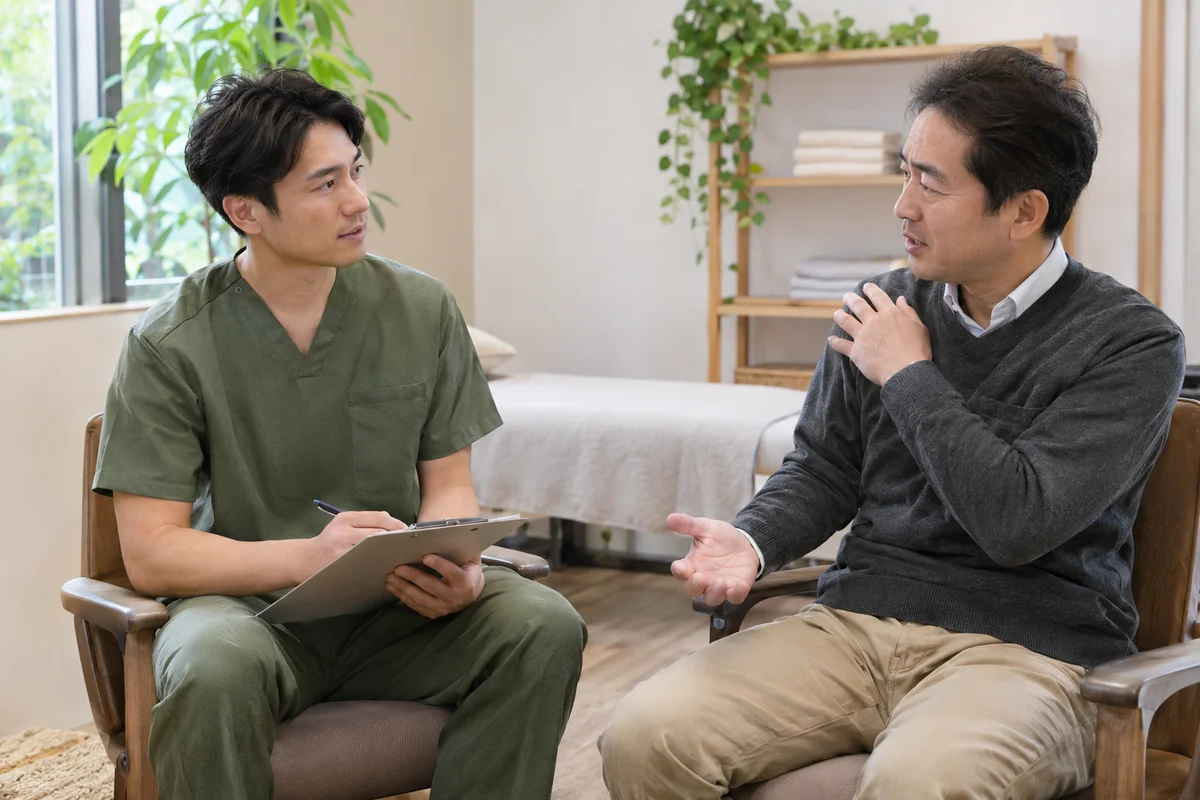
Choose an ordinary task affected by pain: turning your head on a commute, sitting through part of a workday or walking a familiar route. Explain what happens, how much you can do and when you need to stop or change position. This gives the practitioner something concrete to discuss.
A pain rating can be useful, but it is only one part of the account. Sleep, movement, confidence and the demands of your day may also matter. A clear goal helps distinguish a comfortable treatment experience from a change that carries into daily life. Both can be reported without assuming they are the same outcome.
Describe the pattern and relevant history
Explain when the pain began, where you feel it and whether it stays in one area or travels. Mention numbness, weakness, swelling or a recent injury rather than treating them as minor details. Include diagnoses, previous procedures, surgery instructions and the treatments you have already tried.
Location provides a starting point, not a complete diagnosis. Symptoms in a similar place can have different causes and need different assessment. If your current problem has changed since a previous evaluation, explain what is different. A past diagnosis does not automatically answer a new symptom pattern.
Discuss a defined pain concern
The NCCIH acupuncture overview discusses uses involving certain back and neck pain problems and knee osteoarthritis pain. Those are condition-specific contexts for a conversation. They should not be expanded into a promise that acupuncture addresses every cause of pain in the same region.
For example, a plan focused on symptoms and activity tolerance is different from a claim to repair a structure or cure an underlying disease. The assessment should make that purpose understandable and identify any other evaluation that belongs in your overall care.
Match the evidence to the pain problem
A treatment study answers a defined question about particular participants and outcomes. Evidence for chronic low back pain is not evidence that acupuncture treats every new back injury, and knee osteoarthritis findings do not identify the cause of an unexplained swollen knee.
The NCCIH overview describes a 2018 back-and-neck pain review in which 10 studies involving 1,963 participants found greater pain relief with acupuncture than with sham acupuncture. The difference from no treatment was larger than the difference from sham. The comparison matters: the visit’s setting, expectations and interactions can contribute alongside needling. This is a pain outcome, not proof of structural repair or an answer for every new injury.
For osteoarthritis, the ACR’s 2026 recommendations conditionally support acupuncture for the knee, hip and hand. Conditional means a choice to weigh with the person’s symptoms, preferences and overall plan, not a requirement for everyone. NICE NG226 advises against offering acupuncture or dry needling for osteoarthritis. A consultation should explain the relevant condition and options rather than turning either recommendation into a universal success claim.
| Your question | What this means for the plan |
|---|---|
| Does the research fit my diagnosis? | The diagnosis, procedure, comparison treatment and outcomes in the study define the result’s scope. |
| What counts as a benefit? | Separate pain relief, useful activity and any claim about repairing an underlying structure. |
| How will we decide whether to continue? | Agree on a practical goal, a review point and what would prompt another assessment. |
Our knee-pain guide and back-pain guide provide the condition-specific discussion. Use this page to prepare the assessment and understand the proposed needling visit.
Prepare information that affects suitability
Bring your medicines, including nonprescription products and supplements, and explain relevant health conditions. Mention pregnancy or a possibility of pregnancy, bleeding-related medicines, implanted devices, skin problems and previous reactions to needles. These details can affect technique or the decision about what is appropriate.
Include advice from other responsible clinicians, particularly after surgery or an injury. Do not stop a prescribed medicine to make an appointment possible.
Understand traditional assessment language
A TCM assessment may combine the pain’s location, quality, triggers and duration with other symptoms, tongue and pulse observations. It distinguishes the medical diagnosis from a traditional pattern and explains which findings lead to the proposed goal. Beijing’s TCM health education (Chinese) describes two broad ideas: impaired movement of Qi and Blood (“obstruction causes pain”) and insufficient traditional nourishment or warming (“lack of nourishment causes pain”). These do not mean that every pain proves a blocked blood vessel or a nutritional deficiency.
For some muscle-and-joint pain, traditional teaching uses the Bi pattern framework. A university-hospital account (Chinese) describes distinctions that change the traditional aim:
- Wind predominance describes pain that moves between areas; the aim is to dispel Wind and restore comfortable movement within that framework.
- Cold predominance describes fixed, stronger pain aggravated by cold and eased by warmth; the traditional aim includes warming and dispersing Cold. This is not a home heat prescription for a new injury.
- Damp predominance describes heaviness, aching or swelling with restricted movement; the aim is to resolve Dampness and improve the traditional handling of fluids.
- Heat predominance describes a hot, red, swollen painful area, possibly with fever; the traditional aim is to clear Heat and restore movement within that framework, rather than warm the area. Such findings need appropriate medical assessment, not an assumption that routine needling is the next step.
Qi constraint or blood stasis may be considered when distending or more fixed, stabbing pain is assessed in context. Longer-lasting pain may also involve a traditional deficiency pattern, with recurrent aching, fatigue or reduced support for muscles and joints; the aim may include nourishing Qi and Blood or supporting the Liver and Kidney systems. These are functional TCM terms, not a diagnosis of liver or kidney disease. A Chinese Academy researcher’s explanation (Chinese) emphasizes that deficiency can coexist with Cold, Dampness or stasis. The plan should explain which aspect matters most and reassess when pain, activity tolerance or other symptoms change, without treating every pain as the same pattern.
In TCM, channels describe functional connections between body areas, and Qi and Blood organize symptoms and point selection. Modern research described by NCCIH examines sensory signals and how the brain processes pain, local connective tissues and factors such as expectations and the treatment relationship. These are different explanatory approaches. A proposed mechanism, needle sensation or relaxation is not itself evidence that the original daily-life goal has improved. Traditional assessment also does not replace necessary medical examination or testing.
Understanding what will happen during the session
Before treatment, discuss the areas involved, clothing and draping, a comfortable position and how to communicate during the session. Explain if lying on your stomach, turning your neck or staying still is difficult. The setup should account for the relevant limitation rather than making it something to endure silently.
You do not need technical vocabulary to say that a position is uncomfortable or a sensation is too strong. Clear communication is part of the treatment process, and it should remain available after the session has started.
Use feedback about needle sensations
People may describe a brief pinch, pressure or an aching sensation. A sharp or distressing sensation should be reported promptly so the practitioner can assess and adjust. Enduring a stronger sensation is not a required way to show commitment to treatment.
Appropriate preparation includes discussion of hygiene, sterile single-use needles and observation of your response. If you feel faint, unusually anxious or otherwise unwell, say so immediately. Tell the practitioner about previous needle-related experiences beforehand, which can make it easier to plan positioning and communication.
Coordinate acupuncture with physical therapy
Pain and movement limitations can involve different care tasks. A physical therapy assessment examines movement and function before selecting exercises and task practice. Restricted comfortable range may call for a different starting approach from reduced strength, endurance or movement control; the home plan and progression should match the finding. Acupuncture can be considered separately for an appropriate pain concern, then reviewed against the same meaningful activity goal.
A same-day appointment is an organizational option, not a reason everyone needs both. Bring existing exercise instructions and medical restrictions so the professionals involved can understand what you are already doing.
Know where medical massage fits
Medical massage focuses on appropriate soft-tissue work, positioning and pressure communication. It has its own assessment and appointment arrangements. A familiar feeling of muscle tension does not by itself determine that deep pressure is appropriate.
Tell the team about the main task you hope to improve and any response to previous hands-on care. If several services are suggested, each should have a clear purpose. Confirm sequence and time, and keep the plan manageable rather than assuming that adding more procedures automatically creates a better result.
Separate appointment length from response time
The time reserved for assessment and treatment is different from when you might notice a change and how long it lasts. An initial acupuncture or PT visit is usually about 75–90 minutes; arranging both together takes a little longer.
There is no single visit count that predicts an individual’s response. History, the underlying problem and the course of symptoms all affect the next decision. Agree on a point for reviewing the original goal, what to record and what change should prompt you to contact the practitioner sooner.
Make a simple progress record
Return to the same ordinary activity when you compare experiences. You might record how long a familiar walk was comfortable or whether pain interrupted sleep. Note when the observation was made and whether medicine, work demands or activity changed at the same time.
Report both helpful changes and continuing difficulties. A response that is brief, incomplete or different from the original goal is useful information for adjusting the plan.
Leave with clear aftercare and contact information
If you are given individual instructions, make sure you understand them in relation to work, exercise and other treatment already scheduled.
The existing acupuncture aftercare guide discusses soreness and other questions. New severe symptoms deserve timely medical assessment. Chest pain, difficulty breathing or another emergency should not wait for the next routine visit or be assumed to be an expected treatment reaction.
Choose the right next appointment
If symptoms are new, rapidly changing or associated with a significant injury, explain that when seeking care. Progressive weakness or another concerning change may need medical evaluation rather than simply continuing the same treatment or increasing stimulation.
A useful follow-up decision can be to continue, modify the goal, adjust the approach or arrange further assessment. It should reflect the information collected and your priorities. The aim is a coherent plan for the actual problem, with a clear explanation of what happens next.
Use the existing service and clinic entrances
Acupuncture, physical therapy and medical massage are offered at the Manhattan, Forest Hills and Great Neck offices. Confirm the actual practitioner, appointment type and schedule. Insurance benefits need to be checked for the individual service, provider and plan.
Relevant records, a defined concern, comfortable communication and a consistent progress goal provide a practical starting point for an individual consultation.
OUR LOCATIONS
Choose a clinic.
Choose a convenient location to discuss your needs or arrange a visit.