HEALTH JOURNAL
What Happens During Body Gua Sha?
Ben Wong ·
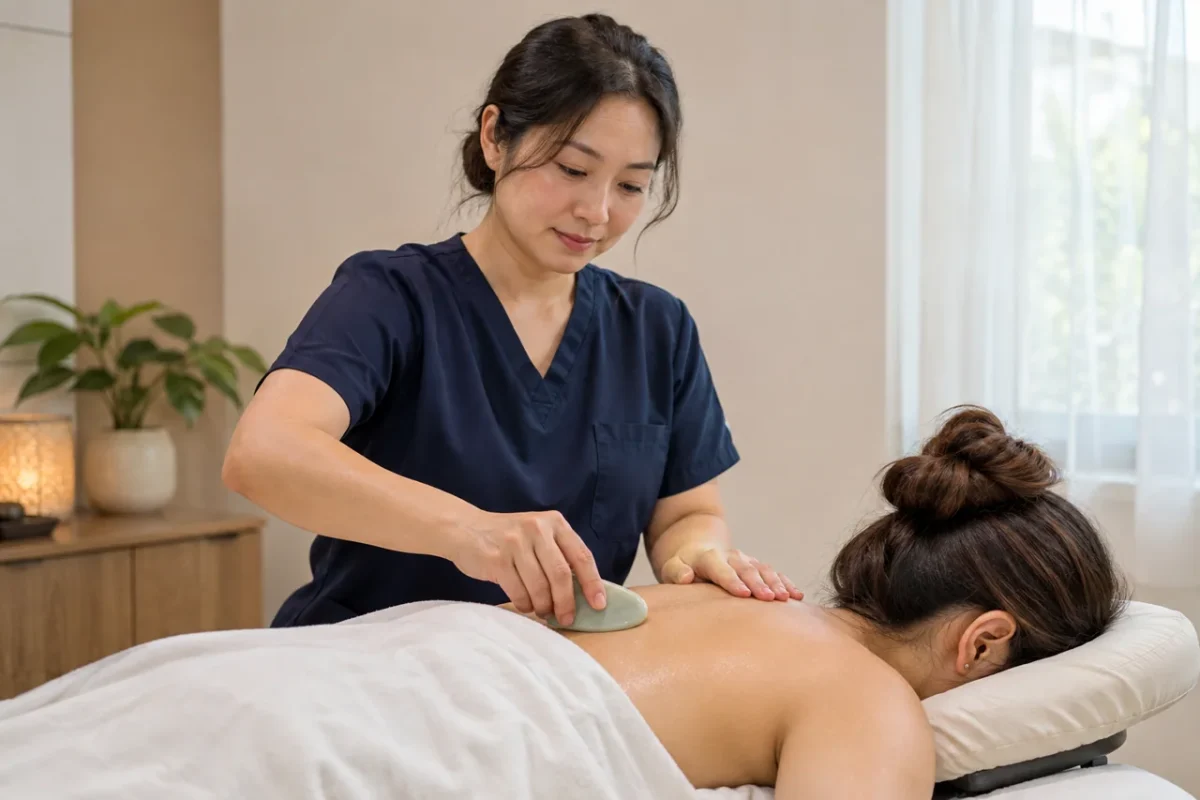
Body gua sha is a manual treatment in which a practitioner strokes lubricated skin with a smooth, blunt-edged tool, commonly over the back, neck, shoulders or limbs. Lubrication helps the tool glide while the area and pressure are selected for the concern being assessed. It is different from the very light facial routine often shown online. Source
The treatment may leave red or purple marks. To understand a session, separate what happens at the skin from what the practitioner hopes to change in the original problem. The color of a mark does not measure toxins leaving the body or tell you how well an underlying injury has healed.
On this page
- What the traditional explanation is trying to describe
- How tool contact differs from deeper pressure
- Why marks appear, and what they cannot tell you
- Connect a session with the problem you want reviewed
- Why skin, medicines and health history change the decision
- Review skin recovery separately from useful change
- Keep facial care and a body-pain consultation distinct
What the traditional explanation is trying to describe
In TCM, qi describes aspects of body function, while qi and blood movement and channels form a traditional framework for relating symptoms and treatment areas. A practitioner may describe gua sha as encouraging that movement to address a region that feels tight, sore or difficult to move. This explains a treatment aim within the traditional model; a mark does not locate a blocked blood vessel or diagnose an organ disease.
The explanation still needs to connect with the actual complaint. Shoulder discomfort after long computer use and a shoulder that has just been injured provide different information. Symptoms, skin condition and health history help determine whether a scraping technique is appropriate at all. The University of Minnesota describes common body areas and the channel framework, rather than a single identical procedure for every pain. Source
How tool contact differs from deeper pressure
The immediate physical action is friction over the skin and superficial tissue. That differs from kneading a muscle or maintaining pressure over a deeper region. A tool’s edge, repeated strokes and the condition of the skin all influence the sensation. Feeling a stronger stimulus at the surface is not evidence that a deeper cause has been identified or repaired.
Pressure should serve an agreed purpose and remain responsive to how the area feels. If the concern is uncomfortable turning, the useful question is whether turning changes, not whether the next stroke produces a darker mark. Beijing’s Administration of Traditional Chinese Medicine describes the channel-based external treatment and specifically advises against making visible marks the goal. Traditional explanation and pressure advice
Why marks appear, and what they cannot tell you
Pressure can break tiny blood vessels beneath the skin, producing pinpoint bleeding called petechiae or a broader bruise. Cleveland Clinic describes this reddish-purple response and distinguishes it from a rash. The observation concerns the skin response to contact; it does not show that a tight muscle has healed or that more marks would be better. Source
The skin should remain intact. Broken skin, escalating pain or extensive bruising calls for stopping and reviewing the technique and its suitability. Clean tools matter as well: the Hong Kong Department of Health’s published advice warns that unsuitable technique can break skin and that instruments need appropriate disinfection to avoid infection. Skin and hygiene advice
Connect a session with the problem you want reviewed
Before treatment, the practitioner identifies the area and reviews relevant symptoms and health information. Lubrication helps the tool move across the skin. The pressure and treated area should be adjustable, and you should be able to pause when the sensation is uncomfortable. Sharp pain is a reason to speak up and stop the provoking contact, not a requirement for a worthwhile treatment.
For a familiar muscle-related difficulty, choose an ordinary activity to compare, such as turning the head. Warmth or relaxation tells you about the immediate experience; being able to turn more comfortably tells you something about the original task. Recording both avoids mistaking one observation for the other. Source
Why skin, medicines and health history change the decision
Because the technique can produce bleeding beneath the skin and bruising, medicines or conditions that affect bleeding are relevant. Report anticoagulant or antiplatelet medicines and bleeding disorders before treatment. Fragile or irritated skin, diabetes, circulation problems, pregnancy and current cancer treatment can also change the decision or the pressure considered. Do not stop prescribed medication to make yourself eligible. Source
Avoid scraping a wound, rash, sunburn or inflamed area. A newly injured region or pain whose cause is unclear may need a different assessment before manual treatment. If pain worsens afterward, the skin breaks, or redness and inflammation increase, obtain medical advice rather than continuing to scrape.
Review skin recovery separately from useful change
At follow-up, compare how the skin is recovering and whether the chosen daily activity has changed. A fading mark and easier neck turning are different outcomes. If the skin settles but the same activity remains painful, the next goal should not simply be to make a darker mark.
An uncomfortable session or a change that does not carry into activity is a reason to reconsider the pressure, treated area or choice of treatment. Do not repeatedly scrape skin that remains painful, inflamed or damaged. Persistent or unexplained symptoms may call for a different assessment, so repeating the same approach is not an automatic next step.
Keep facial care and a body-pain consultation distinct
A light facial routine has a different pressure and purpose from body treatment. Our facial gua sha article addresses that skin-care context. Information about body scraping should not be turned into promises to reshape the face, and an expensive stone does not establish a more suitable treatment.
If your main concern is pain, an acupuncture or medical massage assessment at Wongs Acupuncture & Angel Alliance Physical Therapy can connect the symptoms, the proposed technique and a useful activity to review. The initial decision includes whether a different assessment should come before manual treatment.
OUR LOCATIONS
Choose a clinic.
Choose a convenient location to discuss your needs or arrange a visit.