
HEALTH JOURNAL
What Does Pilates Do? Benefits, Fitness Goals and Limits
Dr. Wei (Sean) Li · · Updated
Pilates practices controlled movement, breathing and muscular endurance. Research in healthy adults has reported improvements in abdominal muscular endurance, and some programs have improved cardiorespiratory fitness. The useful choice starts with the ability you want to train and a way to review it in daily activity.
The most useful approach is to choose a specific goal, understand what the exercises train and check whether the rest of your activity covers your needs. This guide concerns generally healthy adults considering fitness-oriented Pilates. Rehabilitation for pain, an injury or surgery requires a plan for that situation.
On this page
- What does Pilates train?
- What has research in healthy people found?
- Is Pilates cardio or strength training?
- Will Pilates build muscle or reduce belly fat?
- How often should you practice to see a benefit?
- How can you tell whether it is useful for you?
- What changes if you have symptoms or a health condition?
- Connect the training to a practical goal
What does Pilates train?
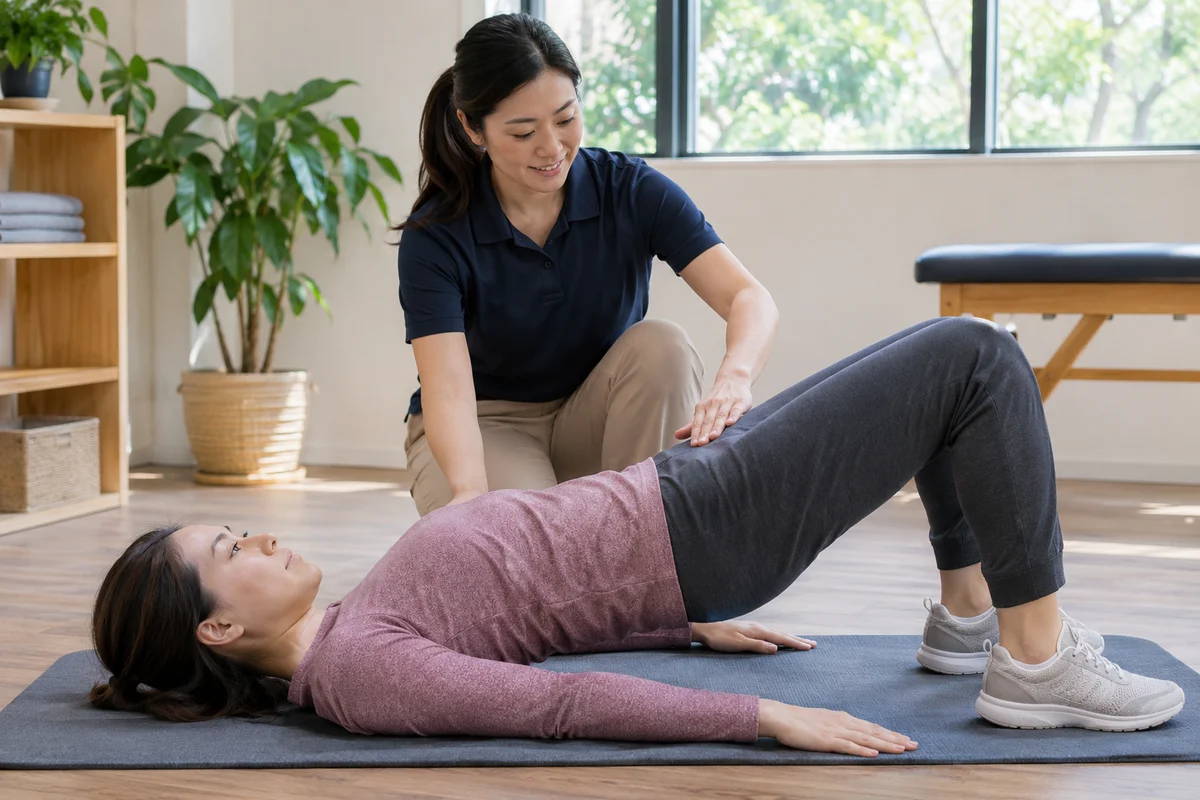
Pilates emphasizes controlled movements and breathing. Depending on the exercises, you may practice coordinating your trunk with your limbs, moving through a comfortable range and working against body weight or equipment resistance. Healthdirect’s description explains mat practice and apparatus such as the reformer. The exercises and loads determine what each session trains and how much work it involves.
It helps to separate three ideas. Strength concerns how much force you can produce; muscular endurance concerns sustaining or repeating muscular work; movement control concerns organizing a task. Being able to repeat an abdominal exercise more often does not necessarily mean you have gained more muscle size or improved every daily activity.
“Core” is broader than visible abdominal muscles. Trunk, hips, arms and legs can have different roles in an exercise, such as holding a position, controlling limb movement or working against resistance. The instructor should explain the purpose of each movement. A few floor exercises do not automatically provide sufficient strengthening for every major muscle group.
What has research in healthy people found?
| Outcome | What the research suggests | What it does not establish |
|---|---|---|
| Abdominal muscular endurance | A review published in 2016 found improvement compared with no exercise in the included healthy-person trials. | That Pilates is best for muscle growth or better than every other strengthening method. |
| Flexibility and balance | A 2011 review reported flexibility and dynamic-balance improvements in its programs; a 2016 pooled analysis did not find a statistically clear flexibility difference. | That every participant or joint will become more flexible, or that Pilates prevents falls in all adults. |
| Cardiorespiratory fitness | The 2023 review reported improvement compared with its control groups; the result describes the programs and participants studied, rather than a promised change from every Pilates class. | Superiority to other exercise, or that every Pilates session meets aerobic activity guidance. |
| Body composition | Body weight, body composition and local appearance are different measurements. Review the actual goal alongside overall activity and nutrition. The 2026 adult-women review found lower weight and body mass index but no significant pooled difference in body-fat percentage, waist circumference or lean body mass. | Predictable fat loss, muscle gain or a particular body shape. |
The 2016 physical-conditioning review included nine randomized trials and searched research through 2014. It found better abdominal muscular endurance versus no exercise, while its pooled flexibility result was not statistically different between groups. The endurance programs used mat or apparatus Pilates two to three times a week for five to twelve weeks. Some individual trials also reported improvements in dynamic balance, quality of life or back-muscle flexibility; these were separate outcomes, not a single measure of overall fitness.
A 2011 review included sixteen randomized or quasi-randomized studies with inactive or exercise comparison groups. Its synthesis reported improvements in flexibility, dynamic balance and muscular endurance. These findings describe different abilities: flexibility concerns the tested movement range; dynamic balance concerns control while moving; muscular endurance concerns repeated or sustained work. Improvement in one does not automatically mean the others have improved.
The 2023 cardiorespiratory review included twelve randomized trials with 569 participants. Its pooled comparison favored Pilates for cardiorespiratory fitness, meaning the ability to support sustained activity through oxygen delivery and use. The separate comparison with other exercise found no difference. Both mat and equipment programs contributed results. The review’s training-volume analysis associated improvement with at least 1,440 total minutes across a program; this describes the included programs and analysis, rather than a minimum prescription for each person.
Is Pilates cardio or strength training?
Pilates can involve resistance exercise, but it is not automatically a complete strengthening or aerobic program. For aerobic activity, consider whether the actual effort gets you breathing harder at a moderate or vigorous intensity. For strengthening, consider which muscles work and whether the resistance presents a meaningful challenge. The name on the timetable cannot answer either question by itself.
Fitness change over a training program and effort during one session are different questions. A 2026 review of six studies measuring Pilates intensity described average activity as light to moderate. A session can include pauses and easier movements as well as harder work. Judge the actual effort and time spent moving when deciding how it contributes to the week’s aerobic activity.
The CDC’s activity guide describes moderate effort as being able to talk but not sing. It also distinguishes work for all major muscle groups: legs, hips, back, chest, abdomen, shoulders and arms. A few introductory coordination drills are not the same as a full strengthening program.
General adult guidance includes at least 150 minutes of moderate-intensity aerobic activity, or 75 minutes of vigorous activity or an equivalent combination, and strengthening all major muscle groups on at least two days a week. You can build this from different activities. These are overall health guidelines, not a requirement to attend Pilates a particular number of times.
Will Pilates build muscle or reduce belly fat?
Working against resistance and improving muscular endurance are different goals from increasing muscle size. The 2022 body-composition review included nine studies published from 2004 to 2019; six reported improvement in at least some measures, such as skeletal muscle or body fat. Those are results for particular programs and measures, not a conversion from a class name to an amount of muscle gain. For a strength goal, the plan needs a muscle-specific challenge and a progression in the work performed.
A September 2026 review in adult women combined twelve controlled studies with approximately 540 participants. Programs lasted five to twelve weeks and most comparison groups continued usual activity or did no exercise. Pooled results favored Pilates for body weight, body mass index and sit-and-reach flexibility, but did not show a statistically significant group difference in body-fat percentage, waist circumference or lean body mass, a measure that includes more than muscle. These are different measurements: a change in weight does not by itself establish abdominal fat loss or muscle growth.
For an abdominal-appearance or body-composition goal, separate muscle performance, body fat and the measurement you want to follow. CDC explains that activity uses energy, food and drink supply it, and weight loss involves using more energy than is taken in over time. The amount of activity needed varies by person. Consider the actual training, nutrition and the rest of the week together. Before-and-after photographs can record appearance but cannot show that Pilates alone caused a change.
How often should you practice to see a benefit?
For a generally healthy beginner, the Center for Young Women’s Health at Boston Children’s Hospital suggests starting with two to three sessions a week. Start with movements and a workload you can perform with control, and fit the schedule around other exercise and recovery. This is a practical starting range; adjust it to the goal, the work within each session and how you respond.
The goal determines practice. For an unfamiliar movement, the instructor demonstrates the setup, observes you repeat it and gives understandable corrections. A strength goal also needs an explained progression in resistance and workload. First make the current version repeatable with comfortable breathing; then change one demand, such as resistance, range or repetitions, and review control and later effects.
Our private Pilates guide explains how range, resistance and complexity can be adjusted around a goal. Our home introduction teaches three starter movements; those few drills are an introduction, not a complete fitness prescription.
How can you tell whether it is useful for you?
Choose an observation that matches the goal. For movement learning, can you explain and repeat the setup without guessing? For muscular endurance, can you repeat an agreed task with the same technique and resistance? For a daily activity, does the improvement carry over outside class? Keep the comparison reasonably consistent.
Record symptoms and later effects as well as what you completed. More repetitions, heavier resistance or soreness are not automatically evidence of useful progress. If your chosen goal is not changing, review the program and the goal rather than simply adding sessions.
What changes if you have symptoms or a health condition?
When pain, a disk problem or hypermobility affects movement, the plan needs ranges, loads and support matched to symptoms and joint control. For PCOS or another condition with ongoing medical care, fit the exercise goals into that care. Pregnancy and surgery can also change suitable positions and loads. A general healthy-adult fitness program therefore needs modification when these circumstances apply.
The NHS Pilates guidance advises professional advice when symptoms, health conditions, pregnancy or recent surgery affect suitability, and stopping if exercise causes pain or feeling unwell. Explain relevant restrictions before starting a general program.
Connect the training to a practical goal
Wongs Acupuncture & Angel Alliance Physical Therapy offers one-to-one Medical Pilates and postural training in Manhattan and Great Neck. If pain limits activity, discuss whether a physical therapy assessment should come first; a separate acupuncture consultation can address an appropriate pain concern. The chosen clinic confirms the requested appointment type and equipment.
OUR LOCATIONS
Choose a clinic.
Choose a convenient location to discuss your needs or arrange a visit.