
HEALTH JOURNAL
How to Breathe During Pilates Without Holding Your Breath
Dr. Wei (Sean) Li · · Updated
During Pilates, keep breathing smoothly while you move. A common starting cue is to inhale gently through the nose, allowing the lower ribs to widen, then exhale through the mouth as the movement becomes more demanding. The aim is coordinated movement, not the biggest breath or the tightest possible stomach. Different exercises can use different breathing patterns.
On this page
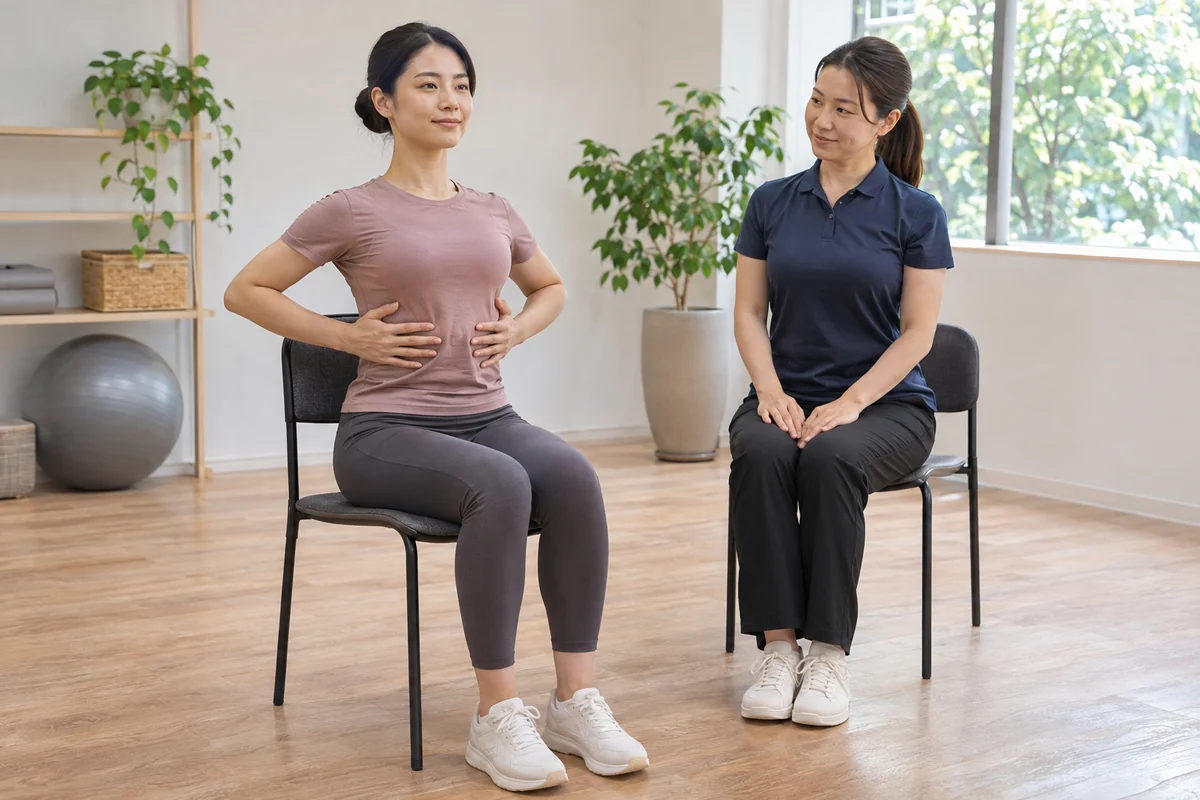
What does breathing into the ribs mean?
Air still enters your lungs; it does not enter the ribs themselves. The cue directs your attention to the movement of the lower rib cage rather than lifting the shoulders with every breath. You may notice expansion around the sides and back as well as the front. Merrithew’s teaching guide describes this as a three-dimensional breathing pattern.
NHLBI explains that the diaphragm, a breathing muscle beneath the lungs, moves downward and the muscles between the ribs help enlarge the chest during inhalation, allowing the lungs to expand. The Pilates cue draws attention to this movement; it does not require the abdomen to stay rigid. Merrithew also allows some abdominal expansion while practicing the rib-cage pattern.
Place your hands lightly around the lower ribs while sitting comfortably. Notice their movement during an ordinary breath. Do not push the ribs outward or force your abdomen completely flat. A useful breath leaves the jaw, neck and shoulders reasonably relaxed.
Why is breathing part of core control?
Core control means organizing the trunk while the arms, legs or spine move. It is not one permanent abdominal squeeze. Breathing and movement have to coexist: a person who can hold a position only by clenching and stopping the breath may need an easier version.
Exhaling can help you notice gentle abdominal engagement. Keep that effort proportional to the task. Lifting one foot a short distance is a different challenge from keeping the legs outstretched or moving against greater resistance. Feeling a hard abdomen alone does not tell you that the exercise is suitable or well controlled.
Must I always exhale on the effort?
Exhaling during effort is a useful learning cue, not an unbreakable rule. In some exercises, inhaling supports opening or extending the trunk; in others, an exhale helps maintain control through that movement. The instructor's chosen pattern should make the particular task easier to coordinate.
If the cue becomes confusing, reduce the movement and return to comfortable breathing before adding complexity. You do not need to hold your breath while deciding whether you have the timing exactly right. Mayo Clinic’s Pilates introduction emphasizes learning the method’s principles before advancing the exercise.
A simple way to practice the coordination
Begin in a supported sitting or lying position that feels comfortable for you. First observe your normal breath without changing it. Next, try a quiet nasal inhale and an unforced mouth exhale. Only then add a small, familiar movement demonstrated by your instructor.
For example, the learning task might be keeping the breath flowing during a short arm reach. If your shoulders lift, your face tightens or you run out of air, make the reach smaller. Change one element at a time. This is practice in coordination, not a test of how long you can sustain abdominal tension.
When should the exercise change?
Light muscular effort is different from pain, dizziness or unusual breathlessness. Stop the exercise if those symptoms appear; do not try to solve them by taking faster, deeper breaths. Persistent or concerning symptoms need appropriate medical assessment.
Pregnancy, recent surgery and an established heart or lung condition may change exercise needs. Existing medical restrictions take priority over a general Pilates cue. Your program should allow enough support and recovery for you to breathe and move comfortably.
Carry the skill into your next session
A useful next step is to practice one breathing cue during one manageable movement, then notice whether unnecessary tension decreases. Our beginner home guide provides a separate starting point for basic movements.
In a private Pilates session, the movement, support and breathing cue can be considered together rather than treating breathing as an extra task to get right. The private-training guide explains how an individual program takes shape.
OUR LOCATIONS
Choose a clinic.
Choose a convenient location to discuss your needs or arrange a visit.