
HEALTH JOURNAL
Start Pilates From a Stable Seated Position
Seated Pilates adapts breathing, controlled movement and coordination to a supported sitting position. It can reduce the need to get down to the floor and back up, making it one possible starting format. Sitting does not make every movement easy or establish suitability for a particular condition, injury or postoperative stage. Chair-based adaptation and scope
On this page
- The chair changes support, not the need for control
- Start with a stable, usable setup
- Choose the goal and check current restrictions
- Keep breathing connected with a clear movement task
- Movement, strength and seated balance are different goals
- Read a general seated example for its purpose
- Build a repeatable practice before increasing the demand
- Review comfort, control and the later response
- Keep seated instruction and general home practice distinct
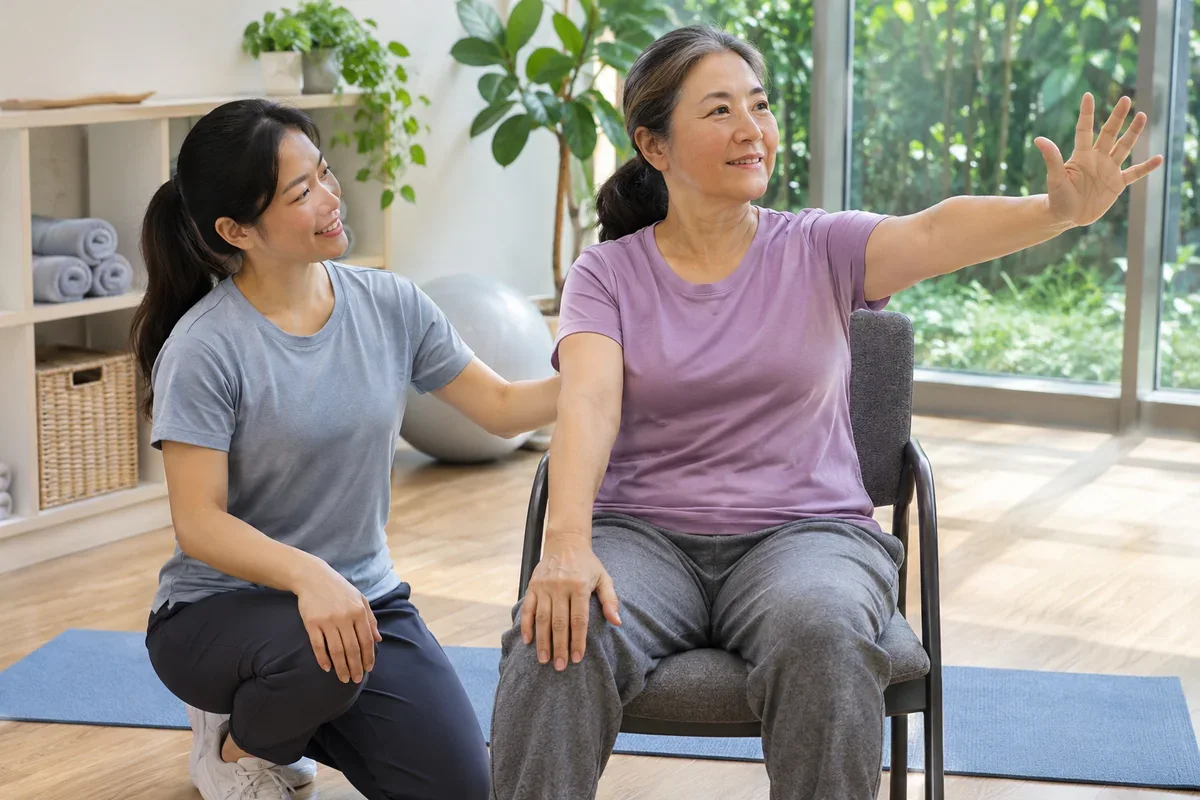
The chair changes support, not the need for control
The chair provides a base so you can practice a selected movement without first managing floor transfers. Moving an arm, turning the trunk or lifting a leg can still change the effort and balance required. The amount of support and the chosen movement therefore matter as much as the label seated.
Pilates emphasizes control, attention, precision and breathing within movement. These principles can guide a seated adaptation, but not every exercise performed on a chair becomes a complete Pilates program. The British Heart Foundation describes these general principles; it does not establish a seated treatment protocol for every diagnosis. Pilates principles
Start with a stable, usable setup
For its general sitting exercises, the NHS recommends a solid, stable chair without wheels, with the feet supported on the floor. Its chair-based Pilates description also specifies a firm seat and backrest. Choose enough clear space for the intended movement and clothing that lets you move comfortably. Source
Seat height, back or side support and room around the arms should fit the person. If you use a wheelchair or special seat, keep the setup consistent with your established sitting and transfer needs; do not force a change of seat merely to copy a generic example. Someone who cannot sit safely without help needs an individually selected starting setup.
Choose the goal and check current restrictions
Describe what is difficult: getting to the floor, sitting comfortably, reaching for an object or sustaining activity before fatigue changes the movement. Also explain pain, dizziness, recent surgery and any limits already given by your care team. An ordinary seated knee lift or arm reach may still conflict with a specific repair.
Choose a task you can compare, such as a small controlled reach or a short practice you can repeat comfortably. NHS exercise-video guidance distinguishes general exercise from treatment for a particular pain condition and recommends individual advice when illness, injury or recent surgery affects suitability. General exercise and individual assessment
Keep breathing connected with a clear movement task
The starting task can pair comfortable breathing with a small movement you understand and can stop at will. For example, a selected arm movement may ask you to keep the trunk comfortably controlled rather than turning the whole body to make the reach larger. The aim is coordination, not holding the spine rigidly in an ideal-looking pose.
If the task leads to breath-holding, straining or excessive tension, discuss reducing the range or adding support. Breathing is part of how the movement is performed; it is not a promise to correct a disease or a requirement to take the largest possible breath. Calderdale and Huddersfield NHS guidance describes breathing control and efficient movement as Pilates goals. Breathing and movement control
Movement, strength and seated balance are different goals
Movement work concerns a useful comfortable range. Strength work concerns meeting an appropriate muscle demand. Seated balance and coordination concern staying suitably controlled while a limb moves or the task changes. Reaching farther is not automatically evidence that all three abilities have improved.
An instructor may adjust support, range or a selected resistance to emphasize one goal. Improved seated control does not by itself demonstrate safe standing, walking or balance during a turn. Those are separate tasks to assess when relevant. A seated format also does not automatically cover every strength or aerobic goal in a wider activity plan.
Read a general seated example for its purpose
The NHS sitting-exercise page describes lifting one bent knee and returning the foot with control. That example illustrates a hip and thigh movement goal, while the seat and other supports help organize the task. It is general seated exercise guidance, not evidence that the same movement treats every diagnosis or a tested complete Pilates program. Source
After a hip, abdominal or another relevant operation, active leg lifting may be restricted. Pain or limited sitting control can also change the choice. The point is to understand why an exercise is selected, how it is supported and what response is acceptable, rather than copy a fixed number of knee lifts from a general page.
Build a repeatable practice before increasing the demand
Endurance is the ability to repeat or sustain a suitable task while keeping useful control. Start with an amount you can manage in the context of the rest of the day, and leave room for rest. Losing breathing control or sliding into a less stable position is information about the demand, not a reason to force extra repetitions.
Progress can mean needing less help, moving more comfortably, controlling the return of a limb or sustaining a short practice more easily. When those responses support a change, adjust one requirement—such as duration, repetitions, range or resistance—rather than making everything harder together. A video’s full length is not a target every person must complete. Source
Review comfort, control and the later response
Compare the same starting position and task: how much help is needed, how the movement looks and feels, and what happens later that day or the next day. Comfort during practice, steadier sitting and better tolerance for an ordinary activity are separate observations. Use them to discuss continuing, changing support or choosing another task.
Stop for sharp pain, dizziness, new numbness or feeling unwell, and seek appropriate advice rather than repeating the provoking movement. Chest pain or sudden breathlessness requires emergency help; in the US, call 911. Sudden breathing difficulty General NHS video guidance says to stop if exercise causes pain or illness; it does not provide individual medical clearance. Exercise safety and scope
Keep seated instruction and general home practice distinct
Wongs Acupuncture & Angel Alliance Physical Therapy offers private Pilates in Manhattan and Great Neck. Explain the support you use, difficulty with floor transfers, any restrictions and the goal you want to address. Confirm whether a suitable seated adaptation can be arranged for your needs.
Our Pilates at home for beginners guide covers a different floor-based starting task. When pain, injury or a medical condition limits activity, physical therapy can help assess a suitable starting plan. Individual feedback should make the movement and its purpose clearer, rather than simply assign a longer routine.
OUR LOCATIONS
Choose a clinic.
Choose a convenient location to discuss your needs or arrange a visit.