
HEALTH JOURNAL
Exploring Nonpharmacological Approaches to Pain Management
Dr. Wei (Sean) Li · · Updated
Nonpharmacological pain management uses treatments and self-management strategies that do not involve medicines. Exercise, physical therapy, psychological therapies, acupuncture and selected hands-on treatments can have different roles in reducing symptoms, improving everyday function or helping you cope. The best starting point depends on the cause of pain and what it is preventing you from doing. The CDC’s overview of pain-treatment options describes why choices should match the condition.
This guide is for adults discussing common musculoskeletal or persistent pain. It explains how options fit together and how joint pain should be separated by diagnosis. Children, people recovering from surgery, and people receiving cancer, sickle cell or palliative care need advice from their treating teams rather than a general plan from an article.
On this page
- What does pain management involve?
- What is chronic pain, and why does the pattern matter?
- Movement and physical therapy
- Acupuncture for joint pain: start with the diagnosis
- How do you choose the right acupuncture guide for joint pain?
- Massage, heat and cold
- Psychological and mind-body approaches
- Which options fit different pain conditions?
- Where does TENS fit?
- Coordinate care without changing medicines on your own
- What does an integrative pain plan actually coordinate?
- Make home care and progress checks practical
- Explore care at Wongs Acupuncture & Angel Alliance Physical Therapy
- Sources and further reading
What does pain management involve?
Pain management means assessing the problem, choosing appropriate treatment, and reviewing its effect on comfort and daily life. Its goals can include walking more easily, sleeping better, returning to work or managing a household task. A lower pain score is useful, but it is only one part of the outcome. Your plan should also explain what to do when symptoms change.
A nonpharmacological intervention does not use a medicine. Nonopioid is broader: it can include medicines such as acetaminophen or anti-inflammatory drugs as well as nondrug care. Choosing a nondrug approach does not require stopping medication. Rehabilitation, symptom-relief strategies and prescribed treatment can be coordinated, with each addressing a defined need.
There is no single best pain-relief technique for every person. Whether pain can resolve completely depends on its cause and course. With persistent pain, useful progress may mean more comfortable activity, fewer interruptions and better coping even when some symptoms remain. The Johns Hopkins chronic-pain overview describes rehabilitation goals that include function, independence and quality of life.
What is chronic pain, and why does the pattern matter?
Chronic pain generally lasts more than three months. It may be continuous or come and go, and feel aching, burning, shooting or stiff. Duration describes the pattern, not the diagnosis. Cleveland Clinic’s chronic-pain guide explains why the underlying cause should be found and treated when possible.
A chronic pain syndrome also needs a more specific assessment: persistent pain can involve function, sleep, mood and participation as well as a painful body area. IASP’s classification distinguishes chronic primary pain from cancer-related, postsurgical or posttraumatic, neuropathic, secondary musculoskeletal, visceral, and secondary headache or facial-pain conditions. A person can have overlapping problems. This classification does not mean all of these conditions use the same treatment plan.
Common examples include persistent back or neck pain, osteoarthritis-related joint pain, nerve pain and fibromyalgia. These are different clinical situations, not interchangeable names for the same problem. Pain can also continue after an injury has healed or occur without a clearly identified injury. New symptoms still deserve attention even when you already have a chronic-pain diagnosis.
An online list of pain conditions cannot establish your diagnosis. Bring the location, timing, severity and effect of symptoms to an assessment, including what has changed since your last visit.
For more focused reading, explore our guides to acupuncture for knee osteoarthritis pain, muscle soreness and recovery after exercise, and assessment of persistent or recurring muscle pain.
Movement and physical therapy
An individualized movement plan may include strengthening, mobility work, balance practice and aerobic activity. These address different limitations: mobility work aims at available movement, strengthening at producing and controlling force, and aerobic practice at sustaining activity. NIAMS’s osteoarthritis guidance recommends a gradual start; water-based exercise can lower joint loading. The choice follows the diagnosis and function being assessed.
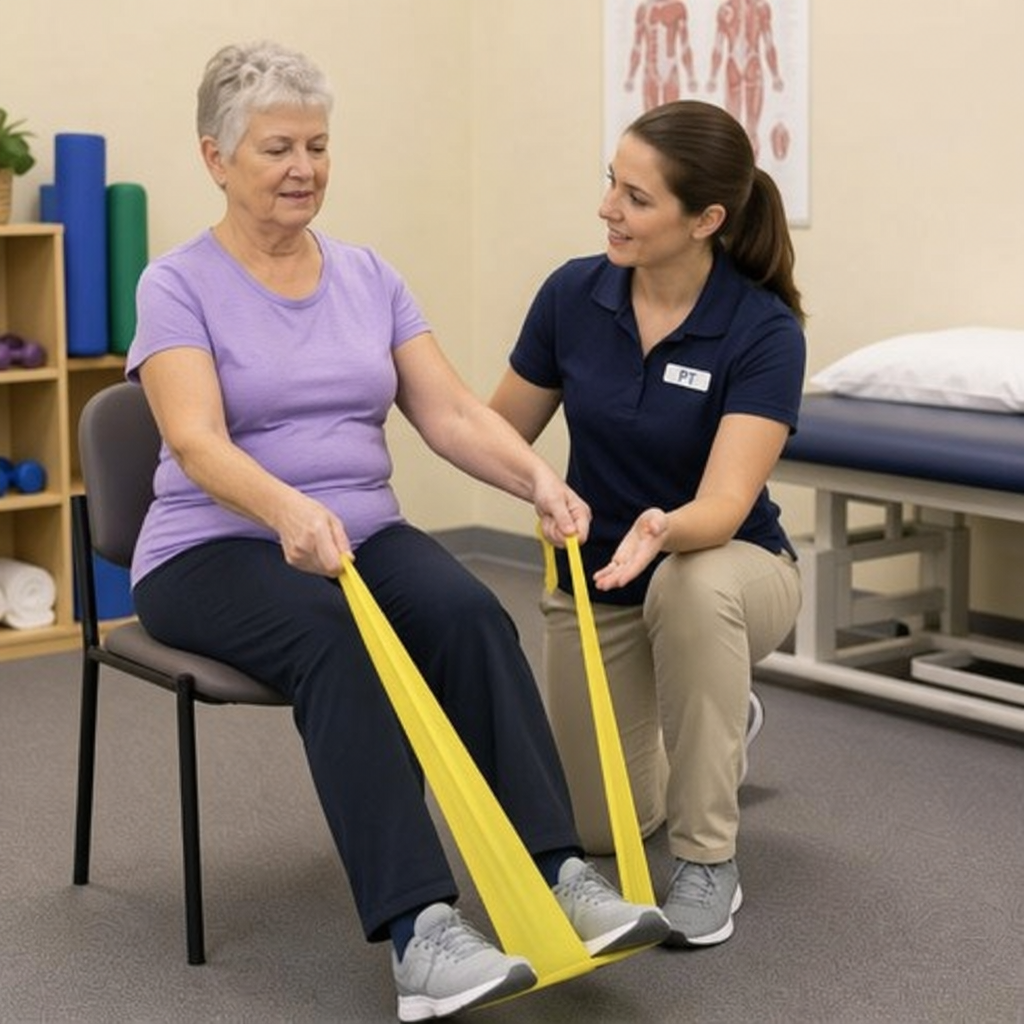
Physical therapy can turn a broad goal into a practical starting plan. If stairs are difficult, explain when it happens, whether you need a railing and whether pain, weakness or balance is the main difficulty. Examination can distinguish restricted movement, movement that is available but hard to control, and early fatigue under load. These findings change the exercise, support and starting amount rather than simply adding more stretching.
For example, after assessment a lower step with a stable rail may provide practice before a full stair task. The therapist demonstrates and checks your performance, explaining height, support, resistance, repetitions, rest and responses to report. Progression may change support, height, load or duration according to control and recovery; a home alternative should be reproducible with your available space and equipment. APTA’s pain guide describes this individualized approach. Our physical therapy service and home exercise guide explain the care path.
Yoga and tai chi combine movement with attention and breathing. NCCIH’s chronic-pain review distinguishes condition-specific uses; for example, yoga’s effects in chronic low-back-pain research are similar to other types of exercise. Choose an appropriate level and discuss modifications for balance difficulties, injuries or pregnancy.
Acupuncture for joint pain: start with the diagnosis
Acupuncture can be discussed during a pain assessment, alongside PT or massage when appropriate. First establish which joint and condition are being treated: pain may follow an injury, arise from nearby tissues or reflect arthritis. The practitioner reviews history and treatment, explains selected near or distant sites, and uses fine sterile single-use needles with consent and feedback. Manual or electrical stimulation may be chosen for the assessed problem; this is not a self-needling map.
NCCIH describes contributions from nervous-system signaling, local tissues and treatment context, including expectations and the practitioner relationship. A pain response does not establish cartilage regrowth or treatment of an autoimmune disease.
Does acupuncture help arthritis?
Acupuncture is an option to discuss for symptom management in osteoarthritis. The American College of Rheumatology’s 2026 osteoarthritis recommendations conditionally support it for knee, hip and hand osteoarthritis. This calls for an individualized choice: identify the affected joint, the activity you want to improve and how you will review a useful change. It does not mean the same plan or result applies to everyone with arthritis.
Guidelines disagree. NICE recommends against acupuncture for osteoarthritis. These recommendations concern osteoarthritis, not rheumatoid arthritis, gout, an infected joint or unexplained new swelling. The diagnosis and other care still matter when discussing a symptom goal.
For a concrete knee-specific example, a 2026 trial at six Shanghai hospitals randomized 480 people with knee osteoarthritis to electroacupuncture or sham acupuncture, three times weekly for six weeks. At week six, electroacupuncture had a reported 40.56-point between-group advantage on the 0–240 WOMAC overall symptom/function scale. This compares a particular electrical protocol with sham, not every joint or all needling methods, and does not demonstrate arthritis reversal.
How does traditional pattern assessment change the emphasis?
In traditional Chinese medicine, some limb/joint pain is discussed as Bi, or obstruction. The Guangming acupuncture teaching material (Chinese) distinguishes Wind predominance, with moving pain; Cold, with more fixed severe pain and cold sensitivity; Dampness, with heaviness and persistent aching; and Heat, with hot, swollen discomfort. Traditional aims differ: disperse Wind, warm and disperse Cold, transform Dampness, or clear Heat, while promoting movement through the traditional channels.
The features often mix, and longstanding obstruction may coexist with insufficient nourishment. The main and accompanying pattern, general health, tongue and pulse guide the emphasis and review. Qi/Blood describe traditional activity and nourishment, and channels describe a traditional network; these are not blood-test or nerve diagnoses. Review the same activity and unwanted responses as the pattern changes. A newly hot swollen joint needs medical assessment before a routine traditional label is applied.
Knee, hip and hand symptoms need different plans
A knee problem may make stairs difficult; a hip problem may limit walking; a hand problem may interfere with gripping or opening containers. Those practical concerns help define what to measure. They are examples of goals, not a way to diagnose the cause.
The same 2026 ACR summary strongly recommends exercise for knee and hip osteoarthritis, while hand exercise has a conditional recommendation. It also advises physical therapy when osteoarthritis-related limitations, worsening pain or fatigue interfere with exercise or daily activities. A treatment recommendation for one joint should not be copied unchanged to another. Our knee pain and acupuncture guide provides the fuller knee-specific discussion; those knee findings do not apply automatically to every joint.
Acupuncture can address joint pain, stiffness and activity difficulty alongside appropriate movement training to support everyday function.
How do you choose the right acupuncture guide for joint pain?
Read by the assessed diagnosis to find the corresponding benefits and activity goals. The knee-osteoarthritis guide focuses on pain, stiffness, stairs and rising; the hip-pain guide considers the source and everyday walking or function.
Acupuncture can be coordinated with exercise, physical therapy, massage and other appropriate care. The combination follows the main concern, assessment and preferences. Describe the activity you most want to regain.
For rheumatoid arthritis, acupuncture is coordinated with rheumatology care around pain, morning stiffness and activity difficulty. Continue prescribed medicines according to the medical plan.
Seek prompt medical assessment for a newly red, hot, swollen joint, especially with fever. Once stable, the team can arrange the corresponding consultation around the diagnosis.
Inflammatory arthritis requires its own medical care
Rheumatoid arthritis is an autoimmune disease in which the immune system attacks the body’s tissues. Joint swelling, prolonged morning stiffness and symptoms in matching joints on both sides can occur. These features should be discussed with a medical clinician; they are not a self-diagnosis checklist. NIAMS describes rheumatoid arthritis and its symptoms.
Care for rheumatoid arthritis aims to control inflammation and protect joints as well as relieve symptoms. Early treatment and ongoing monitoring matter, and disease-modifying medicines may be needed. Any complementary pain care should be coordinated with that plan. Feeling temporarily more comfortable is not a reason to stop prescribed treatment or postpone rheumatology follow-up. NIAMS explains the goals and treatments for rheumatoid arthritis.
When a joint needs assessment before routine treatment
Arrange prompt medical assessment for joint pain with hot, swollen skin, or when you also feel unwell or have a fever. Sudden severe pain after an injury, inability to walk or bear weight, deformity, or loss of feeling after an injury needs emergency assessment.
An acutely painful swollen joint can have several causes, including infection; do not assume it is ordinary arthritis or book routine massage to work through it. The NHS joint-pain guide separates these warning patterns from nonurgent care.
For less urgent symptoms, arrange an evaluation when pain keeps returning, affects sleep or everyday tasks, or is worsening. Bring any previous diagnosis, imaging reports, medicines and treatment responses. The next step may be rehabilitation, a medical investigation or a combination of care, depending on what the assessment finds.
Massage, heat and cold
Massage
Massage is another option to discuss for a diagnosed pain condition. The ACR 2026 summary conditionally recommends it for knee and hip osteoarthritis. Its comfort and activity goal can be reviewed alongside exercise. The same session may feel relaxing without changing how long a person can walk, so compare the intended daily task as well as immediate comfort.
Tell the practitioner about injuries, surgery, medicines and other relevant care. Massage acts on soft tissues through strokes, kneading or selected pressure; area, position, pace and force are adjusted with feedback. Stronger treatment is not automatically better. NCCIH’s massage safety guide describes rare serious harms and individual precautions, including bone, bleeding and clot risks. Our medical massage service and focused-visit guide explain the consultation.
Heat and cold
Heat can provide temporary comfort and help muscles relax; cold may help with pain and swelling. Protect the skin with a towel barrier and check it regularly. Do not apply a pack to broken or numb skin, or sleep with an ice pack in place. Follow product and clinician instructions. The Sherwood Forest Hospitals heat-and-ice guide explains safe use.
Heat should not be applied to an already hot, swollen area. Temporary relief is not a test of healing and should not postpone assessment when symptoms are worsening.
Psychological and mind-body approaches
Psychological care addresses real pain and its effects on life. Cognitive behavioral therapy (CBT) teaches ways to respond to pain, stress and unhelpful patterns of thought or behavior. For example, a plan may identify a cycle of fear, avoiding all activity, then overdoing tasks on a better day, and practice a manageable alternative. The CDC treatment overview includes CBT. Its use does not mean the pain is imagined.
For fibromyalgia, NIAMS describes a plan that may combine psychological or behavioral therapy, medicines and self-management. Activity starts at a manageable level and increases gradually, with professional support when needed. Read NIAMS guidance on living with fibromyalgia.
Other practices include guided imagery, picturing a calming scene; progressive muscle relaxation, gently tensing and releasing selected muscles; and biofeedback-assisted relaxation, using measurements such as muscle tension or heart rate to recognize changes. Comfortable, unforced breathing may also be used. NCCIH’s relaxation guide distinguishes them. If a practice causes distress or worsens symptoms, stop and discuss an adaptation; people with relevant medical or trauma histories may need guidance.
Which options fit different pain conditions?
This comparison is a discussion guide. It shows why the diagnosis matters when considering treatments; it is not a prescription or a complete list of chronic-pain conditions.
| Pain situation | Options to discuss | A useful distinction |
|---|---|---|
| Chronic low back pain without nerve-root symptoms | Exercise, rehabilitation, selected psychological or mind-body approaches, and acupuncture appear in ACP’s low-back-pain guidance. | This guideline does not establish the same benefit for sciatica or every cause of back pain. |
| Knee or hip osteoarthritis | Exercise has a strong recommendation; tai chi is conditionally recommended in the 2026 ACR summary. | Adapt activity to mobility and balance. Acupuncture recommendations differ between guidelines. |
| Fibromyalgia | Gradually adapted activity, CBT and other parts of an individualized plan, as described by NIAMS. | Account for fatigue and sleep difficulties instead of treating this as ordinary workout soreness. |
| Persistent neck pain | Selected exercise or mind-body approaches, massage or acupuncture may be discussed. The CDC’s 2022 evidence review describes condition-specific effects. | Benefits for pain and function can differ, and the diagnosis still matters. |
For more detail about these different situations, read our guides to acupuncture and physical therapy for back pain, sciatica and radiating leg symptoms, or neck and shoulder care. Fresh injuries and postoperative pain need their own movement and recovery instructions.
Where does TENS fit?
Transcutaneous electrical nerve stimulation, or TENS, sends a mild electrical current through pads on the skin. It may provide temporary pain relief, but it does not work for everyone. If the cause of pain is unclear, seek assessment before trying a device. The NHS TENS guide describes its use and precautions.
Temporary relief and a guideline recommendation are different. NICE does not recommend TENS for chronic primary pain, where no underlying condition adequately explains the pain or its impact; this is different from pain attributed to a defined disease, and both can coexist. NICE also advises against TENS for osteoarthritis. With a pacemaker or epilepsy, do not use it. During pregnancy use it only on medical advice. Do not use it on broken, infected, irritated or numb skin, or while sleeping, bathing, driving or operating machinery. Follow the actual device and professional instructions.
Coordinate care without changing medicines on your own
An integrated plan gives each treatment a purpose and keeps your clinicians informed. Describe what helps, what causes problems and what you can sustain. Using several services at once is not a requirement for effective care.
Do not stop or rapidly reduce prescribed opioids on your own. The CDC’s 2022 guideline cautions against abrupt discontinuation or rapid reduction except when a life-threatening problem, such as impending overdose, requires urgent action. Discuss changes to any prescribed medicine with its prescriber.
What does an integrative pain plan actually coordinate?
An integrative plan should explain the role of each part of care: a medical clinician may investigate a cause or manage medicines, PT may address an activity limitation, and an acupuncture or massage consultation may consider an appropriate symptom goal. The word integrative does not establish that every available therapy is necessary or equally supported for your condition.
Keep one practical summary of the diagnosis or remaining assessment, medicines, movement restrictions and intended outcomes. The teams involved should know where new symptom reports go and who manages medication changes. A complementary appointment can then support the existing plan.
Make home care and progress checks practical
Bring a short account of where pain occurs, how long it has lasted, what changes it and what you have tried. Then agree on a manageable plan:
- One meaningful goal: choose a walk, household task, sleep-related difficulty or part of work that matters to you.
- A starting approach: clarify what to try first, how often, and which modifications you need. The home plan also explains what responses to report, when to pause and when another assessment is needed.
- A review point: compare the same activities, comfort and unwanted effects before deciding whether to continue or change the plan.
For persistent pain, pacing organizes activity into manageable amounts. Break a larger task into stages and plan pauses, rather than using a better day to catch up on everything. Cambridge University Hospitals describes planned pacing: note a manageable starting amount, use a reminder if needed, and review before increasing time, repetitions or reducing a break. New or changing symptoms still need assessment; pacing does not require ignoring them.
Keep space for a regular sleep routine, supportive relationships and activities you enjoy. If sleep remains difficult, raise it with your clinician. These are practical parts of self-management, not a test of willpower. The NHS self-management guide offers examples.
Back-pain symptoms that need urgent care
With back pain, new bladder or bowel changes, loss of sensation around the genitals or anus, or weakness or numbness in both legs require emergency assessment. Back pain after a serious accident also needs emergency care. Sudden severe or rapidly worsening pain, especially with fever or feeling unwell, needs urgent medical advice. The NHS back-pain guidance explains these warning signs. Use emergency services when needed; a routine clinic booking is not a substitute.
Explore care at Wongs Acupuncture & Angel Alliance Physical Therapy
Wongs Acupuncture & Angel Alliance Physical Therapy offers acupuncture, physical therapy and medical massage in Manhattan, Forest Hills and Great Neck. You can discuss pain-related goals and whether an acupuncture consultation, rehabilitation assessment or focused massage visit fits your situation. An initial acupuncture or physical therapy visit is about 75–90 minutes. When both are arranged together, the visit takes a little longer.
CBT, biofeedback and TENS appear in this guide to explain the wider range of pain-management approaches; their inclusion does not establish that Wongs Acupuncture & Angel Alliance Physical Therapy offers them. Bring your current care plan, and confirm appointment availability and visit arrangements with the clinic.
Sources and further reading
- CDC’s overview of pain-treatment options
- Johns Hopkins chronic-pain overview
- Cleveland Clinic’s chronic-pain guide
- Read NIAMS guidance on exercise and osteoarthritis
- NCCIH’s review of complementary approaches for chronic pain
- American College of Rheumatology’s 2026 osteoarthritis recommendations
- NICE recommends against acupuncture for osteoarthritis
- NIAMS describes rheumatoid arthritis and its symptoms
- NIAMS explains the goals and treatments for rheumatoid arthritis
- NHS joint-pain guide
- NCCIH’s massage safety guidance
- Sherwood Forest Hospitals heat-and-ice guide
- Read NIAMS guidance on living with fibromyalgia
- NCCIH guide to relaxation techniques
- ACP’s low-back-pain guidance
- CDC’s 2022 evidence review
- NHS TENS guide
- chronic primary pain
- Cambridge University Hospitals explains pacing and planned progression
- NHS self-management guide
- NHS back-pain guidance
- IASP: chronic-pain classification
- APTA: pain assessment and a movement plan
- NCCIH: acupuncture mechanisms and safety
- 2026 electroacupuncture versus sham for knee osteoarthritis
- Guangming acupuncture teaching material: Bi patterns (Chinese)
OUR LOCATIONS
Choose a clinic.
Choose a convenient location to discuss your needs or arrange a visit.