
HEALTH JOURNAL
Rebuild Joint Function Without Rushing a Healing Ligament
Dr. Wei (Sean) Li · · Updated
Physical therapy after a ligament injury aims to protect the injured tissue while rebuilding useful joint movement, muscle strength and control. The starting plan depends on the ligament and joint involved, how stable the joint is, and whether a brace, loading restriction or operation is part of care. The word tear alone cannot specify one exercise program. Source
A recent injury with severe swelling, obvious deformity or inability to put weight through the area needs medical assessment before a general rehabilitation routine. For an assessed injury, the useful next question is which capacity needs rebuilding and which stress still needs to be limited. Source
On this page
- A ligament sprain differs from a muscle or tendon strain
- Assessment connects the injury with a useful goal
- Protection has a purpose and a review point
- Movement, strength, control and endurance have different jobs
- High ankle sprains and injuries at other joints need their own plan
- Increase one task demand at a time
- Persistent instability needs a new look at the plan
- Use the plan for the actual injured joint
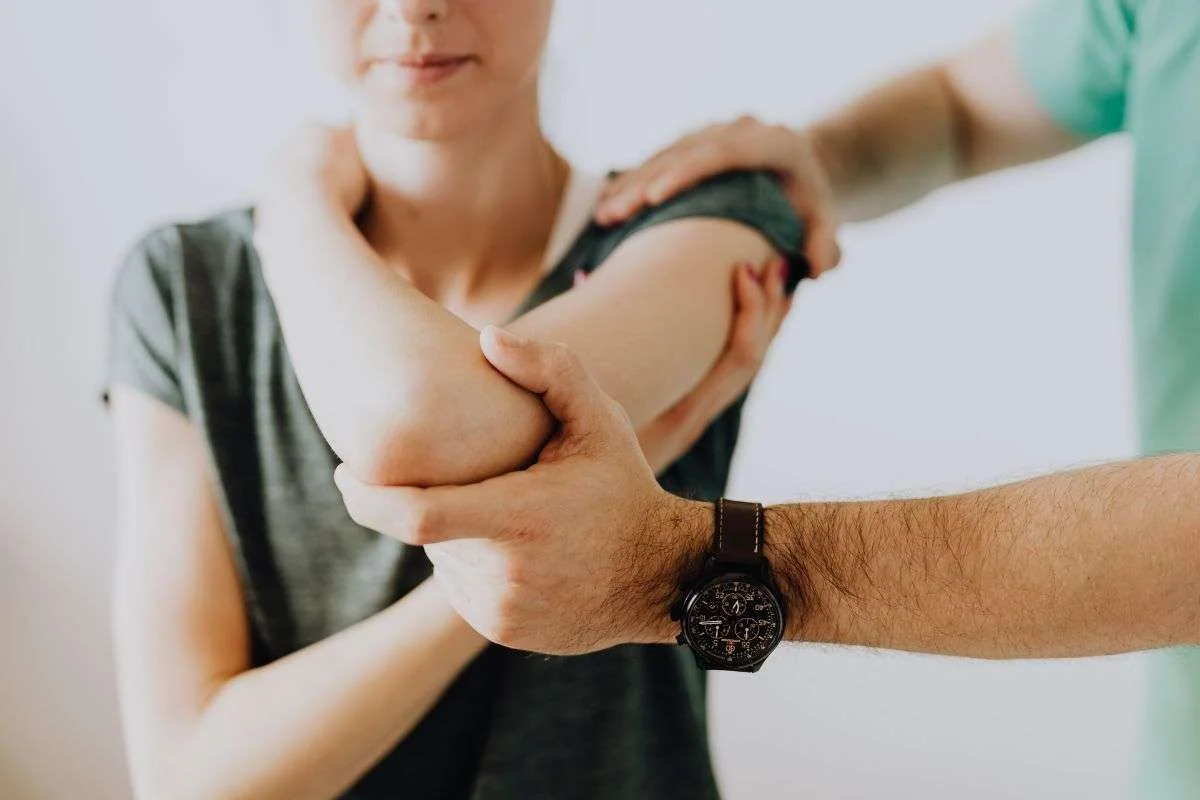
A ligament sprain differs from a muscle or tendon strain
Ligaments connect bone to bone and help stabilize a joint. Tendons connect muscles to bones; a strain affects a muscle or tendon, while a sprain stretches or tears a ligament. This matters because the tissue that needs protection and the stresses that challenge it can differ. Source
The American Academy of Orthopaedic Surgeons (AAOS) describes Grade I sprains as slight stretching with some fiber damage, Grade II as partial tearing, and Grade III as a complete tear that may cause significant instability. Pain, bruising and swelling can occur across these grades, so pain intensity alone does not establish the injury severity.
A complete tear does not automatically mean the same treatment at every joint. For example, AAOS notes that some isolated ankle ligament tears can recover with appropriate protection and rehabilitation without surgical repair. Other unstable or severe injuries can need specialist or surgical care. The joint, stability, associated injuries and actual response determine that decision. Ankle-specific example
Assessment connects the injury with a useful goal
The assessment brings together how the injury occurred, where symptoms are felt, movement and strength, and how the joint behaves during appropriate examination. Imaging can be used when it helps clarify the injury or an associated problem. The U.S. National Institute of Arthritis and Musculoskeletal and Skin Diseases (NIAMS) describes this combination of history, examination and testing as needed. Source
The plan also needs an activity goal. A person with an ankle injury may first need comfortable supported walking; someone with a wrist injury may need to hold an everyday object without provoking symptoms. Those tasks identify different demands. Do not force the joint or perform your own stress tests to decide whether it is stable.
Protection has a purpose and a review point
A brace or support may limit a direction that stresses the injured ligament. Prescribed crutches can reduce the amount of weight carried through an injured leg. AAOS describes bracing for some moderate sprains, while the degree of injury can change the protection required. Source
Follow the instructions for when support is worn, which movements are restricted and how much loading is permitted. Protection is not a rule to keep every joint still for the same number of weeks. The treating team reviews what can be added as the condition changes. After a repair or reconstruction, the actual surgical restrictions take priority over a general nonsurgical plan.
Movement, strength, control and endurance have different jobs
Range-of-motion work first addresses how far the joint can move within the permitted limits. Strengthening addresses how much force the surrounding muscles can produce: reaching an angle does not establish that the muscles can complete a task under load.
Control and endurance add different questions. Control concerns how you guide and steady the joint during a task; endurance concerns how long or how often you can repeat it. Improved range can therefore still leave work to do on steady use and the demands of a longer work period.
In its ankle guidance, AAOS separates mobility, muscle strengthening, balance and later endurance or agility work. Balance practice addresses a different task from simply moving the ankle through an angle. That ankle example shows why the plan may need several kinds of practice, without making the same exercises appropriate for a wrist or another injured ligament. Ankle rehabilitation example
NIAMS describes both clinic and home exercises within an injury-specific rehabilitation plan. The therapist selects the starting position, amount of support and task that can be practiced, rather than use pain tolerance as permission to apply every type of load. Source
High ankle sprains and injuries at other joints need their own plan
A high ankle sprain involves the syndesmosis, the ligament connection between the lower-leg bones just above the ankle. It differs from a typical lateral ankle sprain on the outside of the ankle. Assessment needs to establish stability and associated injury before deciding protection, permitted weight bearing and progression. The published rehabilitation review describes injury-specific protection followed by progressive movement, strength, balance and activity tasks.
A wrist, elbow or knee ligament injury also changes the task being rebuilt. Holding an object, taking weight through a hand, climbing stairs and turning during sport place different demands on the joint. The actual ligament, a brace or repair, and the treating team’s instructions determine the starting task. Use this broad guide for the principles, then follow the plan for the named injury rather than copying an ankle routine.
An acupuncture consultation for an assessed pain concern can be coordinated with this plan. The injury’s stability, protection and permitted loading still guide rehabilitation. A new inability to use the joint, increasing deformity or repeated giving way needs reassessment before more demanding practice.
Williams & Allen, 2010: Rehabilitation of Syndesmotic (High) Ankle Sprains
Increase one task demand at a time
For a leg injury, walking with permitted support can precede more demanding stairs, balance tasks or direction changes. For a wrist injury, holding an object and taking weight through the hand are different demands. The therapist can adjust support, resistance, repetitions and task complexity to fit the injury and the response.
Use pain, swelling, movement quality and the ability to repeat the task as information for reassessment. A task that is manageable once may still be difficult throughout a work period. Higher-speed turns, jumping or heavy work need the relevant capacity and any required medical clearance; they do not follow automatically from a painless ordinary movement. These are progression examples, not tests to attempt before assessment.
Persistent instability needs a new look at the plan
Less pain is useful, but repeated giving way, increasing swelling or a substantial loss of function needs review. Giving way means the joint feels as though it cannot reliably support or guide the movement; it should not be dismissed simply because resting pain is lower.
Severe or worsening symptoms warrant medical reassessment. Some unstable injuries or severe tears need specialist or surgical management, while others can progress with a revised nonsurgical plan. The decision follows the actual ligament and examination, not a promise that more exercise will solve every tear. Source
Use the plan for the actual injured joint
Our ankle sprain rehabilitation and ACL rehabilitation guides cover more specific care paths. An operation or a generalized joint-laxity condition, involving unusually loose joints across the body, also needs its own plan; a broad ligament-injury article cannot replace those details.
Wongs Acupuncture & Angel Alliance Physical Therapy offers physical therapy in Manhattan, Forest Hills and Great Neck. An acupuncture consultation can be considered for an assessed pain concern, while ligament protection and rebuilding function remain tied to the specific rehabilitation plan.
OUR LOCATIONS
Choose a clinic.
Choose a convenient location to discuss your needs or arrange a visit.