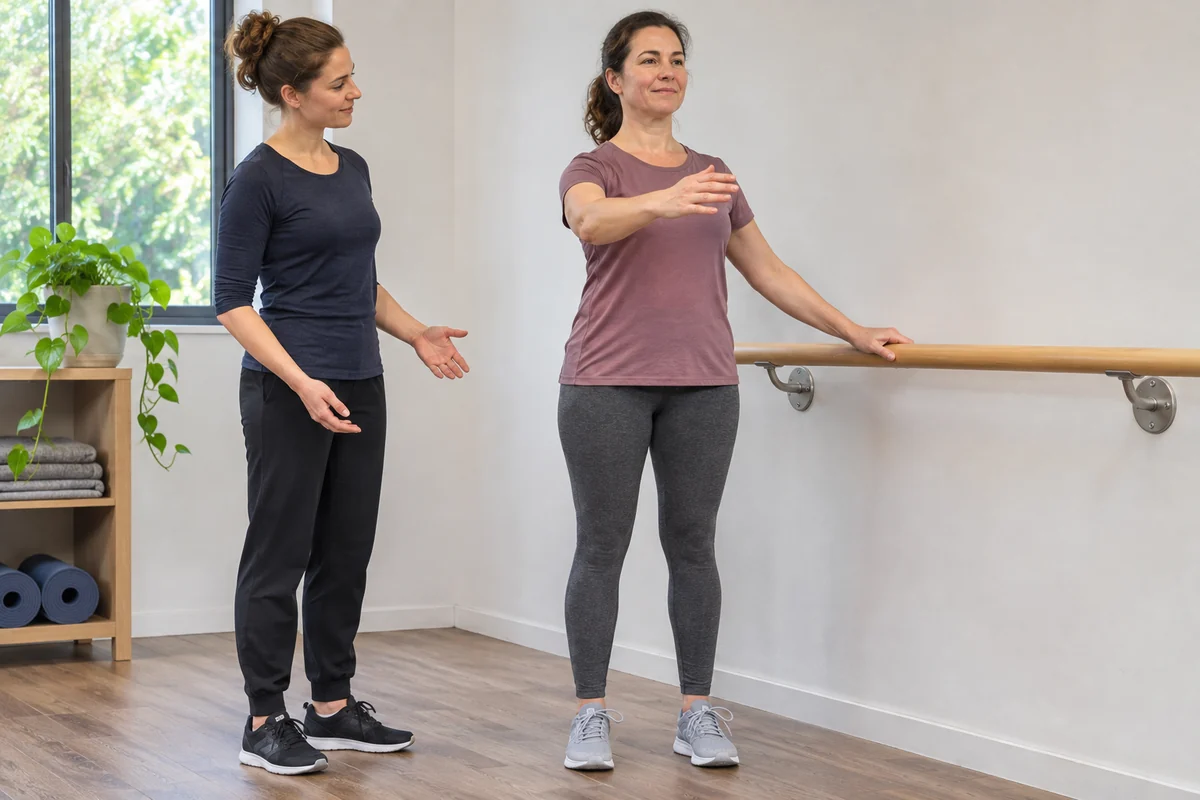
Beginning Standing Pilates Without Turning Balance Into a Test
Learn how to choose support, space, and a manageable challenge for standing Pilates. Understand when a different starting position or assessment is needed.
Read article ↗KNOWLEDGE FOR YOUR EVERYDAY
Physical therapy, movement practice and recovery in daily life.
Find guides to physical therapy assessment, movement practice and recovery after pain or injury. Start with the New York referral guide if your first question is how to arrange care; then explore how rehabilitation connects treatment with daily activity.
Learn how to choose support, space, and a manageable challenge for standing Pilates. Understand when a different starting position or assessment is needed.
Read article ↗Explore Pilates for persistent nonspecific low back pain, sensible modifications, study scope, and symptoms that need assessment before exercise.
Read article ↗Physical therapy after hip replacement helps restore safe walking, transfers, strength, and everyday independence while following the surgical team's instructions.
Read article ↗Achilles tendon pain is usually managed by identifying the problem, adjusting aggravating activity, and progressively rebuilding calf-and-tendon capacity.
Read article ↗Compare mat and Reformer Pilates by resistance, support, position, and instruction. Learn why neither format is automatically easier or better.
Read article ↗Physical therapy after a humerus fracture helps restore arm movement and useful function while respecting the bone’s current protection needs.
Read article ↗Compare classical and contemporary Pilates by sequence, adaptation, equipment and beginner learning, and understand how instruction and health needs affect the choice.
Read article ↗See how physical therapy for older adults connects strength, balance and endurance to daily tasks, safe home practice, gradual progression and reassessment.
Read article ↗Postoperative physical therapy starts with knowing what was done and which tissues still need protection.
Read article ↗Physical therapy for suspected facet-related pain aims to improve comfortable movement and the ability to manage daily loads.
Read article ↗Physical therapy after a muscle strain helps restore movement and gradually rebuild the muscle's ability to handle work.
Read article ↗Physical therapy for spondylolysis usually combines temporary changes to painful activity with a gradual return to trunk control, strength, and everyday movement.
Read article ↗Book online with Zocdoc or text the office you plan to visit.